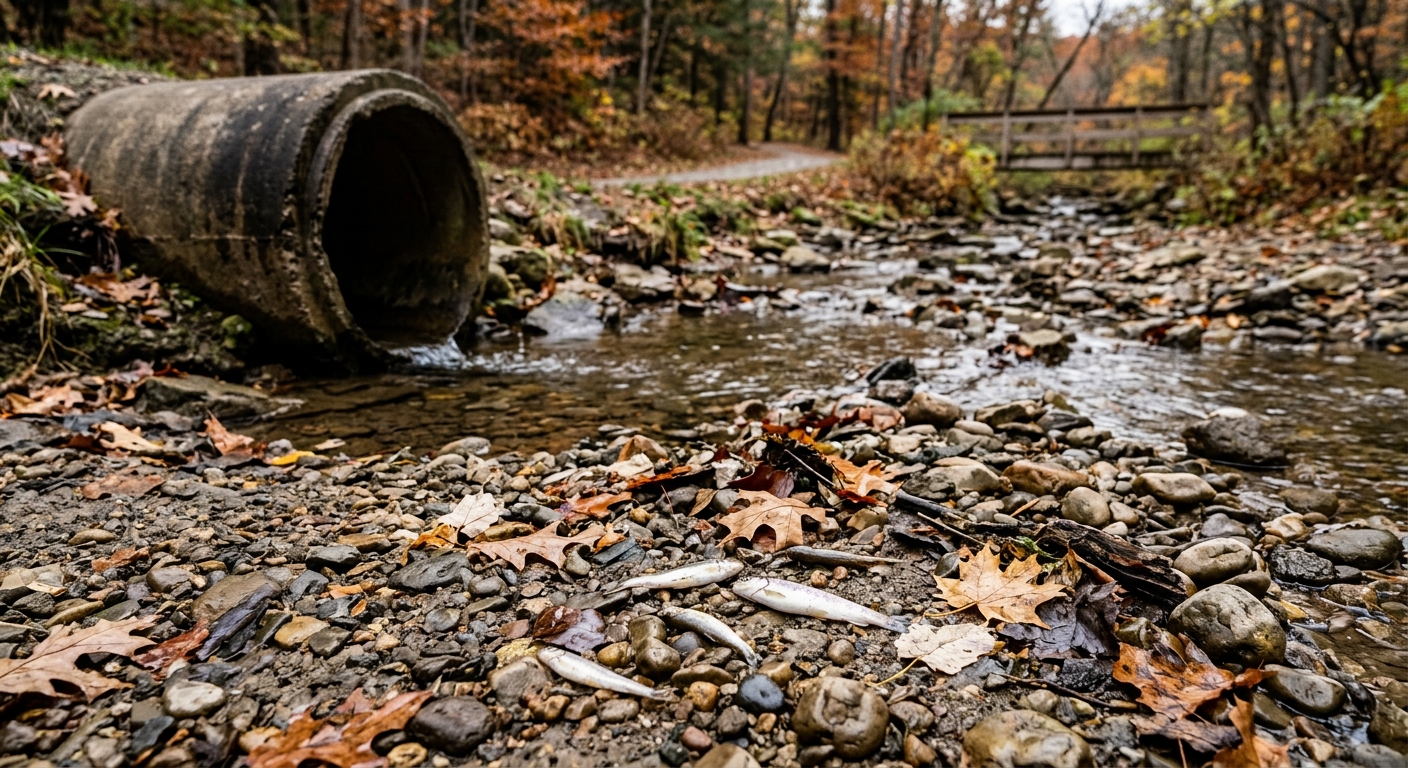
AI-generated illustration; not a photograph of the reported event.
- calendar_today November 16, 2026
Investigation Launched After Large Fish Kill in Oak Ridge
Authorities are investigating a fish kill involving approximately 450 dead fish discovered last Friday in the stream at A.K. Bissell Park, located in Oak Ridge, Tennessee. The incident prompted a swift response from the Tennessee Wildlife Resource Agency (TWRA) as local residents reported the unexpected sight of numerous fish deaths in the popular park’s waterway.
TWRA Responds to Reports of Fish Deaths
The TWRA reported that they first received a complaint about dead fish in the stream at A.K. Bissell Park on November 7. The stream, running between the culvert under South Tulane Avenue and the large culvert near the park’s amphitheater, was the site of the incident. TWRA officials responded to the call within 24 hours to investigate the scene and survey the area.
Potential Causes: Rainfall, Water Levels, and Overcrowding
Following their investigation, TWRA officials stated that a combination of factors likely contributed to the fish deaths. The agency explained that heavy rainfall of about an inch-and-a-half on November 5 may have caused the fish to move upstream into newly formed or expanded pools as water levels rose. As the water subsequently receded, many fish became trapped in isolated pools where overcrowding occurred.
According to TWRA, the overcrowding in these separated pools depleted the available dissolved oxygen, resulting in fish death. None of the approximately 450 dead fish sampled during the survey were federally or state-listed.
Timing and Area Impact of the Mortalities
TWRA officials noted that although investigators responded within a day of getting the report, evidence suggested the mass mortality event happened more than two days before the agency was notified. The fish deaths were contained within the area between the two culverts, and no dead fish were observed beyond these points.
Culvert Failure and Barriers to Fish Movement
The agency also identified infrastructure issues that may have exacerbated the problem. The large culvert near the amphitheater in A.K. Bissell Park has failed, causing water to flow beneath the structure and creating a barrier to fish movement, particularly as water levels decline. This barrier can contribute to further isolation and crowding of fish during periods of fluctuating water conditions.
TWRA Findings and Monitoring
TWRA investigators also checked water quality indicators in the affected area and found them to be within acceptable ranges. The agency continues to monitor the situation and assess any additional risks to local aquatic life.
This incident underscores the complex interplay of environmental factors, infrastructure, and aquatic health in urban streams. As the investigation continues, TWRA urges the public to stay vigilant and report any future fish kills or unusual water conditions in local waterways.
Source: wkrn.com.