- calendar_today August 21, 2025
.
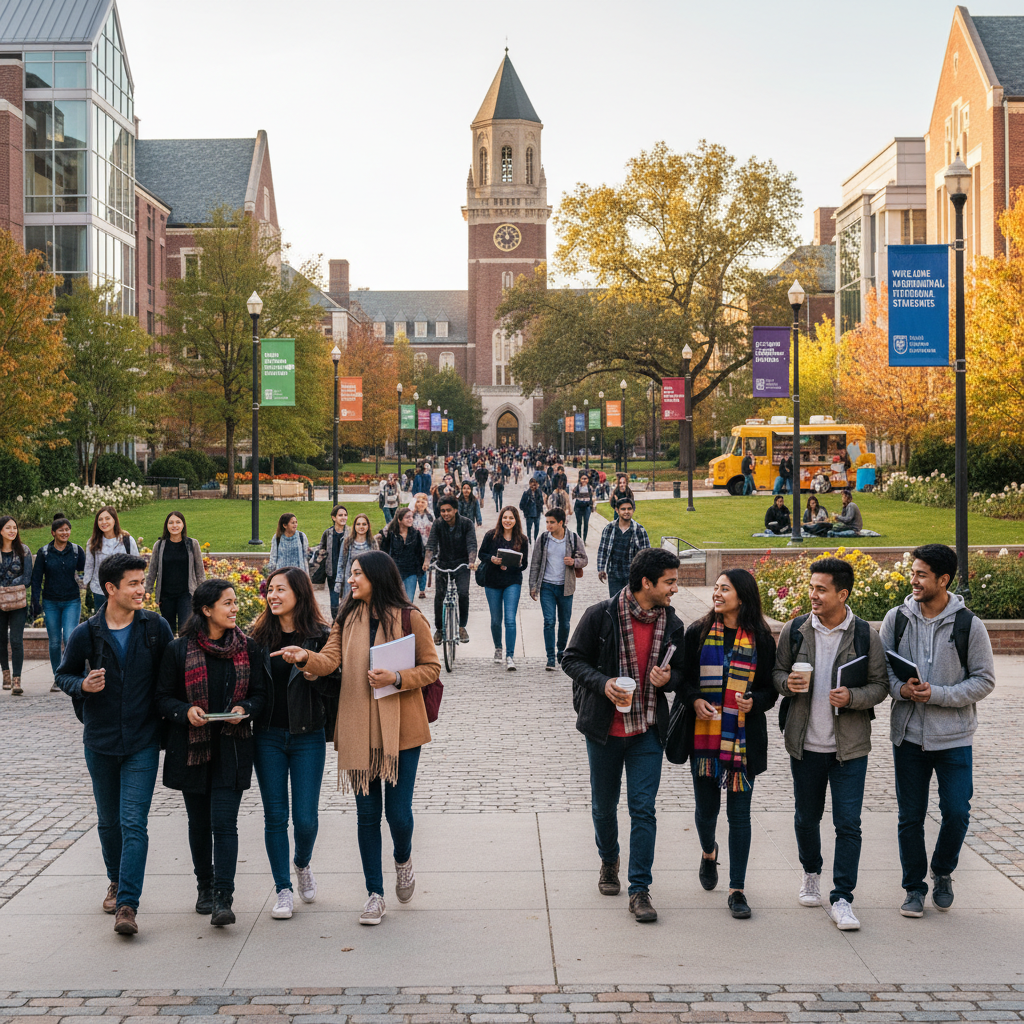
U.S. President Donald Trump on Monday said he would allow 600,000 Chinese students to attend colleges in the U.S. The move, which comes after months of worsening trade tensions, is the latest sign that Washington may be softening on its approach toward Beijing.
Addressing reporters in the White House, Trump said, despite his government’s ongoing attempts to push back against China’s economic might and political influence, he would not cut off students.
“We’re going to allow their students to come in,” he said. “I hear so many stories that we’re not going to allow their students. … It’s very important, 600,000 students. It’s very important. But we’re going to get along with China.”
The announcement came after Trump threatened more tariffs against Chinese imports in a phone call with Senate Minority Leader Mitch McConnell (R-Ky.). Trump said last week that if his administration did not receive what it wanted from Beijing on trade, it would impose a 200 percent tariff on Chinese-made magnets, which are used in electric vehicles and some high-tech machinery.
“They, China, intelligently, went and they sort of took a monopoly on the world’s magnets,” Trump said, promising that, “We’ll probably take a year to have them.”
For months, U.S.-China trade relations have been at a standstill, with Beijing retaliating as the U.S. imposed a 145 percent tariff on all Chinese goods. China has hit back with a tariff of 125 percent on U.S. goods and is reportedly also considering an additional 25 percent tariff on American products.
Negotiators from both countries met in Geneva in May, but, in recent weeks, Trump has continued to consider new tariffs.
Approximately 270,000 Chinese nationals currently attend colleges in the U.S., so Trump’s new 600,000 figure would be more than double that. U.S. colleges and universities have come to rely on tuition from Chinese students, with many families now shunning U.S. colleges that they view as too politically liberal.
Trump’s announcement on Monday is a reversal of earlier plans to make it harder for Chinese nationals to study in the U.S. In May, Secretary of State Marco Rubio said the U.S. was planning to “aggressively revoke” visas from Chinese citizens working in sensitive research institutions or in the Chinese Communist Party, many of whom were students. The move, seen as the White House’s attempt to rein in China’s espionage activity on campuses, provoked outrage in the higher education sector.
In June, Trump appeared to step back from his administration’s policy, telling reporters that “I’ve always been in favor of having students” from China.
On Monday, Trump also indicated that he was open to a potential meeting with Chinese President Xi Jinping, saying he “would like to meet him this year.”
“We’re taking a lot of money in from China because of the tariffs and the different things,” Trump continued. “It’s a very important relationship. So, it’s a much better relationship economically than it was before with Biden, but he allowed that. They just took him to the cleaners.”
A Boost for U.S. Universities
Trump’s new stance on student visas for Chinese nationals would give universities in the U.S. a huge cash injection. In the 2021 fiscal year, the U.S. collected $11.2 billion in tuition and fees from foreign students, a figure that has nearly tripled in the past decade. Of that $11.2 billion, $7.6 billion was paid by students from China.
Chinese students were critical in keeping some universities afloat during the pandemic when international travel was restricted. Now, the prospect of doubling the number of Chinese students could give the struggling U.S. higher education sector a major cash injection.
The White House in the past has claimed to be walking a tightrope, juggling the need to crack down on China, while not severing the relationship altogether. Chinese students, the administration has previously argued, are critical in that regard, acting as diplomatic tools that help soften relations while also fueling intellectual exchange and learning.
On Monday, Trump couched the announcement with another tariff announcement, a potential 200 percent levy on Chinese-made magnets. So, despite promising a 600,000 increase in Chinese students in the U.S., Trump is still considering new tariffs that would hammer China and, perhaps, help American industry gain a greater share of the magnet market.