- calendar_today August 27, 2025
Tennessee Braces for AI’s Big Shift in the Job Market
Artificial Intelligence is no longer science fiction—it’s quickly on its way to becoming a driving force behind work and daily life. The World Economic Forum predicts that nearly half of all U.S. jobs will be redesigned by AI by 2030. Here in Tennessee, where manufacturing, healthcare, logistics, and education are the name of the game, that change is already underway.
Rather than taking jobs away, AI will transform the way we work. In Tennessee, this will mean tens of thousands of workers need to change, reskill, or re-occupy in new positions associated with new technologies.
What AI Means for Tennessee’s Workforce
AI can do the drudge work, sort through vast quantities of data, and even handle customer service. But far from signaling the apocalypse, it signals a new dawn—one that values flexibility and imagination.
This is how the AI tide impacts Tennesseans:
- Tedious work will disappear. AI machines will handle repetitive work in factories, offices, and customer service.
- Demand for new skills will rise. Workers who are comfortable with tech, data, and machine cooperation will be in vogue.
- Human-centric jobs will grow. Empathy, leadership, and creative jobs—like healthcare, education, and the arts—will be equally valued.
Tennessee Industries Undergoing AI Transformation
Manufacturing
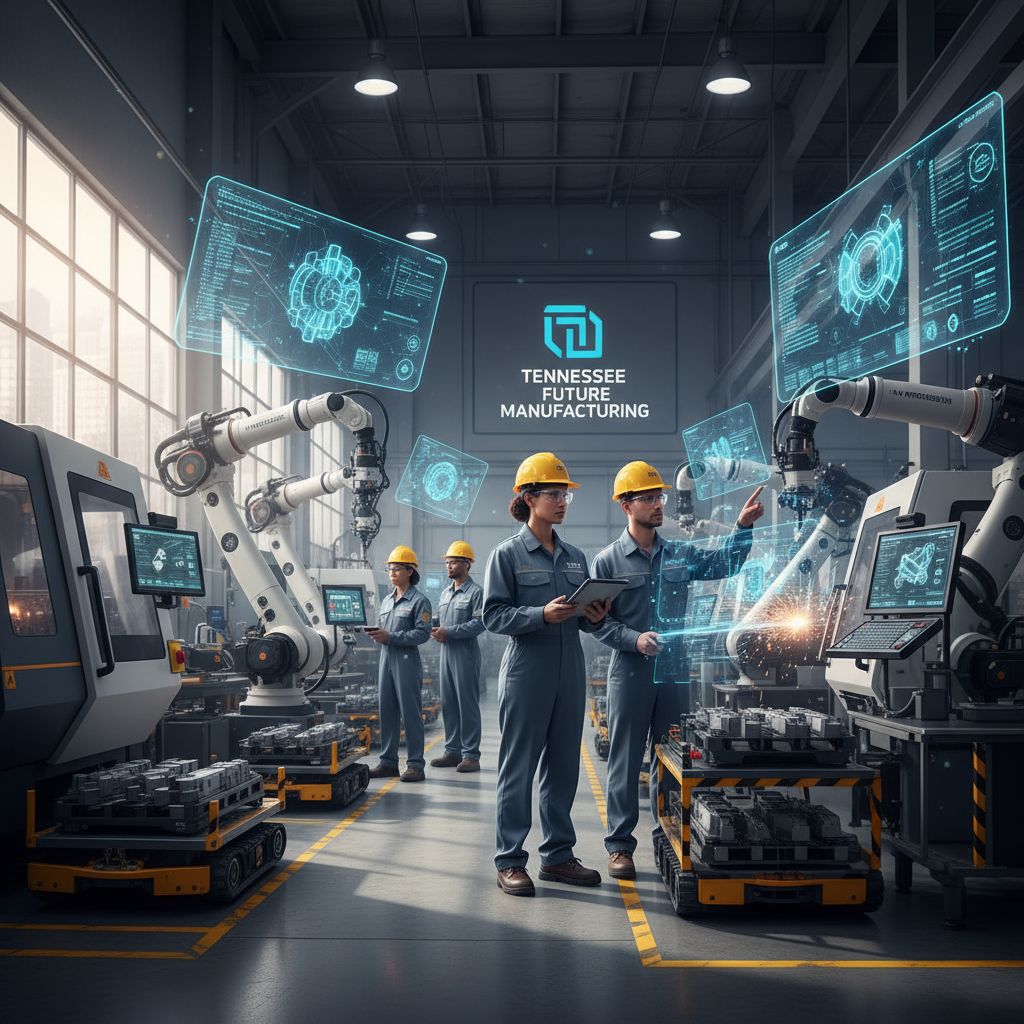
Tennessee has been an industrial hub for decades, with cities like Chattanooga, Clarksville, and Smyrna. Robotics and AI software are making it quicker, smarter, and more secure—but they are also reducing the need for human labor. Machine operators can be substituted, whereas technicians who serve smart systems become more in demand.
Logistics and Supply Chain
Home to FedEx’s worldwide hub in Memphis, Tennessee’s logistics industry is a key component of the economy. AI technology now plans out routes, tracks stock, and even automates warehouse activities. Workers in basic logistics roles may need to reskill or transition into AI-supported planning and monitoring.
Healthcare
Nashville, being its health care system, is seeing hospitals adopt AI to improve patient diagnosis, record-keeping, and processes. While some admin jobs will become redundant, others like nursing, technical support, and data-driven healthcare occupations are increasing.
Education
Artificial intelligence is transforming classrooms too. Educators can take advantage of smart tools that customize education to specific needs but need to develop digital competencies to stay in step. Tennessee educators will need to evolve, not become obsolete.
Most Likely Cities to Face the Most Transformation
Nashville: With its growing tech and healthcare sectors, AI technology will take hold more rapidly—more opportunity, but faster disruption.
Memphis: Workers in warehouses may need the most retraining.
Chattanooga & Knoxville: These manufacturing cities will need comprehensive reskilling efforts for their workforce.
Rural communities: Rural workers will be left behind without strong internet or technology infrastructure, unless the state invests in digital access and education.
How Tennesseans Can Prepare for the AI Era
Learn New Skills
Tennessee’s vocational schools and community colleges offer training in skills like IT support, data analysis, and robotics. Even a little digital literacy is a huge upgrade.
Adopt Tech-Enhanced Positions
Jobs that blend traditional know-how with new technology—like health technology techs, logistics coordinators who work online, and software testers for AI—are growing hugely.
Prioritize Soft Skills
Wherever logic is a machine’s strong suit, it can never replace human empathy, ethics, or judgment. Leadership, care, and communication jobs will still thrive.
Be Open to Career Changes
Chasing a new path is fine. AI may close one door but open another—usually with higher wages and flexibility.
What Employers and Policymakers in Tennessee Should Do
To stay competitive and support workers, businesses and leaders must act now:
- Businesses need to offer in-house training, certificates, and online reskilling.
- State leaders need to invest in rural broadband, science, technology, engineering, and math education, and employment placement services.
- Public-private partnerships can create apprenticeships in high-growth AI-specific fields.
If employers, schools, and government work together, Tennessee can lead—not follow—through the AI revolution.
A Balanced Outlook: Not All Jobs Are Going Away
Though some dread it, AI does not mean mass unemployment. While many jobs will be automated, very few entire jobs will be lost entirely. In fact, AI may create more new jobs than it destroys, especially in fields like tech, healthcare, and green energy.
For example:
- AI needs designers, ethicists, trainers, and engineers.
- Abundant cybersecurity analysts, app developers, and AI testers are needed.
- The healthcare sector is hiring more data-savvy clinicians and care coordinators.
Closing Thoughts: Tennessee Can Succeed With the Right Steps
AI is on track to replace 50% of work by 2030—and that change is already knocking on Tennessee’s door. The future belongs not to the fastest coder, but to the most adaptive learner.
No matter if you work in a Knoxville factory, a Nashville nurse, or a Memphis truck driver, your job’s future isn’t set in concrete. It’s evolving—and with the right support, you can evolve alongside.