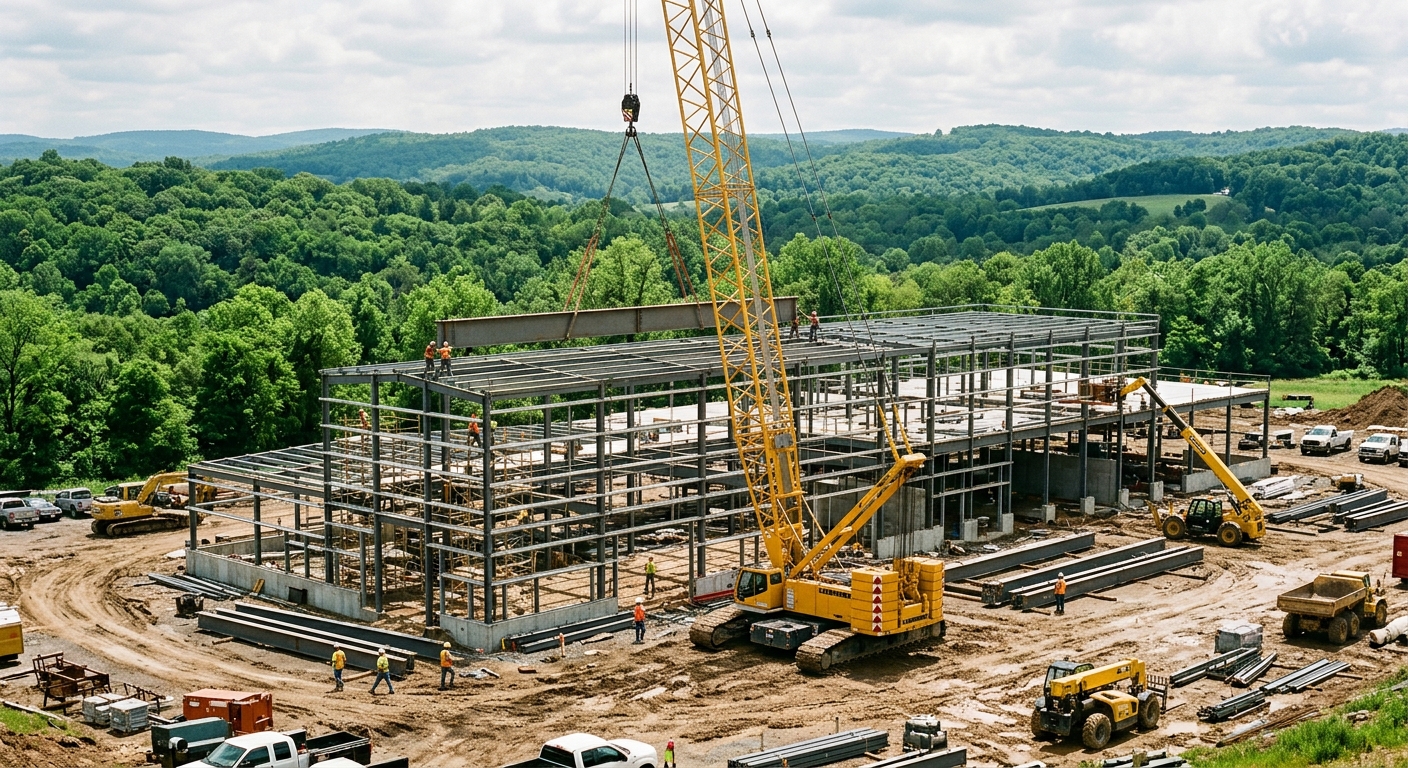
AI-generated illustration; not a photograph of the reported event.
- calendar_today October 20, 2026
Introduction: A Manufacturing Renaissance in America
The United States is witnessing a rapid manufacturing renaissance, attributed largely to the implementation of tariffs and targeted tax cuts under President Trump. These policies have incentivized companies to build and invest in American factories, marking a notable shift in industrial activity and economic direction.
Policy Changes Fueling Growth
The centerpiece of the policy shift is the new ability for companies to expense 100 percent of the costs for building factories on American soil in the year those costs occur, instead of depreciating them over nearly four decades. This provision, combined with protective Trump tariffs, is influencing chief financial officers to reconsider the United States as the preferred location for new factory initiatives.
President Trump has openly encouraged foreign entities to invest, build, and hire domestically to avoid tariffs—effectively using trade enforcement as a tool to spur manufacturing growth and industrial investment at home.
Manufacturing Jobs and Economic Indicators
Data reveals striking trends in manufacturing jobs and related employment. During the last two years of the previous administration, 230,000 manufacturing jobs were lost. However, since December 2025, U.S. manufacturers have added 72,000 jobs, with four consecutive months of payroll increases leading up to September. The ISM Manufacturing Index, a critical barometer of factory activity, moved above the expansion threshold of 50 in January and has remained there for nine straight months.
Supporting this upswing, construction employment has grown by 109,000 year-over-year, predominantly in nonresidential specialty trades connected to manufacturing construction, such as electricians, steel erectors, and pipe fitters.
Wave of Factory Investments and Foreign Involvement
Since January 20, 2025, there have been over $380 billion announced in factory investments across more than 500 projects, translating to over 160,000 direct manufacturing jobs. Of those projects, 63 are valued at $1 billion or more, but the typical investment is around $90 million, suggesting a broad distribution rather than reliance on a few mega-factories.
Almost half of these investments are for new, or "greenfield," plants, while the remainder involve expanding, modernizing, or reopening existing facilities—revitalizing areas long known as the "Rust Bowl." Notably, approximately two-thirds of these projects are backed by foreign-owned companies, reversing historical trends of offshoring production in search of lower costs and less regulation abroad. Taiwanese, Japanese, Korean, German, and British firms have all made significant commitments to American manufacturing.
Key Projects and Strategic Impact
Major projects highlight the breadth and scope of the manufacturing renaissance. TSMC is investing $100 billion in semiconductor production in Phoenix, while Micron brings $25 billion to Boise, Idaho, for memory chips. Pharmaceutical production is expanding with Eli Lilly’s investments in Houston, Huntsville, and Virginia. Hyundai Steel, Hanwha, and Korea Zinc are all building or expanding plants for steel, shipbuilding, and critical mineral processing in locations such as Louisiana, Philadelphia, and Tennessee.
Some investments support national priorities, such as Hanwha’s $5 billion shipyard investment in Philadelphia and Anduril’s $3.7 billion submarine-component plant in Maryland, reinforcing claims that economic security is national security.
Regional Distribution and Economic Preferences
Of the 522 known projects, around 70 percent are located in 26 Republican-leaning states, accounting for $207.5 billion in investment and more than 125,000 direct jobs. Eighteen Democratic-leaning states account for 90 projects and $44.3 billion. The decision where to locate factories stems from factors like taxes, regulation, energy costs, permitting, and workforce capabilities, not central government intervention, according to economic principles of "revealed preference."
Conclusion: Factories Return Home
The renewed focus on factory tax cuts, trump tariffs, and policy-driven incentives has undermined the notion that the decline of U.S. manufacturing was inevitable. With concrete being poured and new steel rising, the landscape of American manufacturing is being reshaped—demonstrating, per Peter Navarro’s analysis, that policy choices are bringing factories back and driving America’s manufacturing future.
Source: tennesseestar.com.