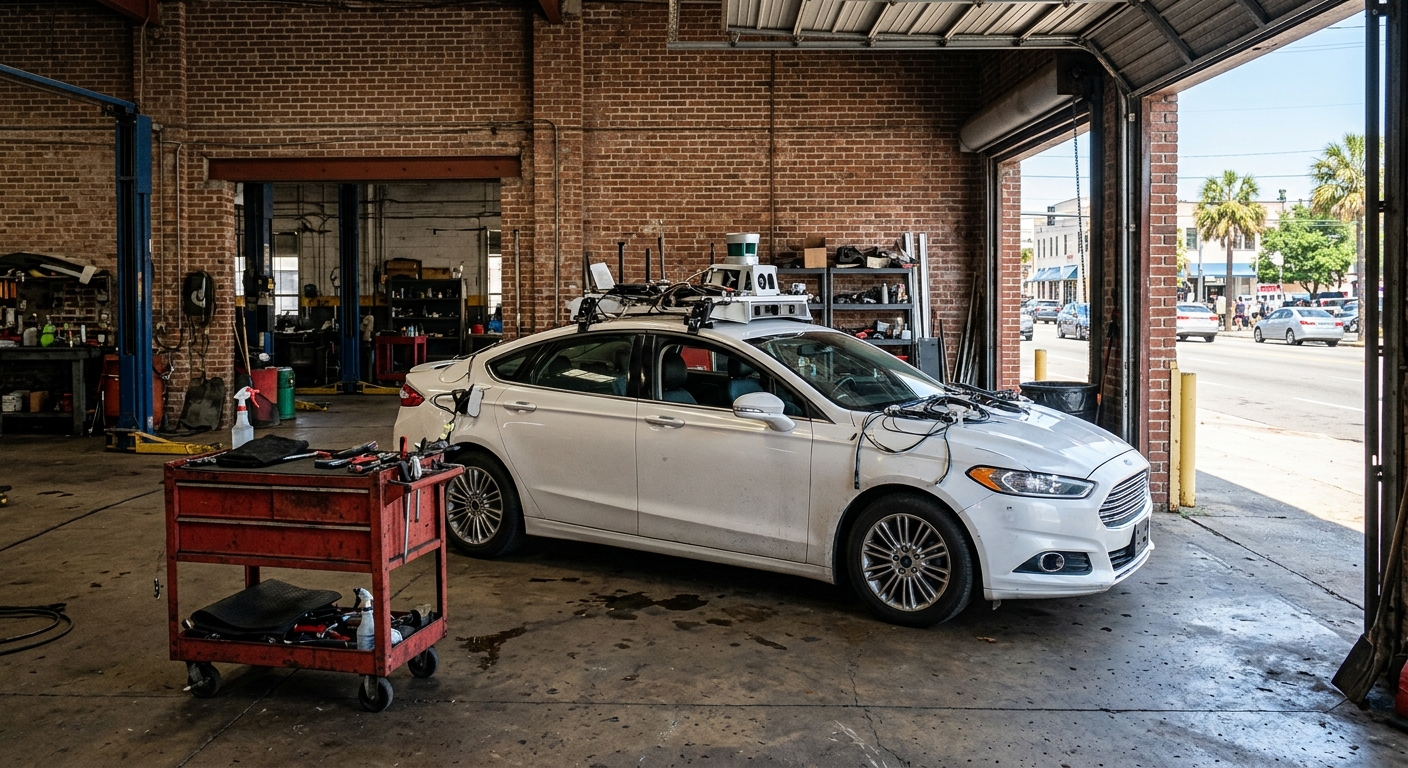
AI-generated illustration; not a photograph of the reported event.
- calendar_today August 13, 2026
NASHVILLE, Tennessee – The adoption of driverless cars in Tennessee is gaining momentum as Nashville launches a new human-driven depot to back the growing fleet of autonomous vehicles. This initiative, shaped by a high-profile Lyft Waymo partnership, signals a major transformation for the region’s transportation infrastructure and the future of urban mobility.
Lyft and Waymo Join Forces to Shape Nashville Transportation
For the first time, two leading rideshare competitors—Lyft and Waymo—are working collaboratively to nurture a reliable fleet of autonomous cabs throughout Nashville. This collaboration goes beyond competition, with both companies sharing resources to improve fleet management and technical support. The venture serves not just as a business partnership but as a catalyst for integrating autonomous vehicles efficiently across the region.
Driverless Car Support Center: Bridging Humans and Autonomous Technology
The newly established car fleet depot in Nashville serves as a central hub for both routine maintenance and daily oversight of driverless car support operations. The depot fulfills a crucial role, ensuring that behind each driverless vehicle, there is still a team of professionals safeguarding reliability and safety. Human oversight remains integral, highlighting a phased approach as Tennessee gradually shifts towards widespread autonomous adoption.
Podcast Sheds Light on Rideshare Technology Evolution
The recent episode of the NashVillager Podcast, produced by Nashville Public Radio and hosted by Nina Cardona, spotlighted these advances in rideshare technology. The podcast provided in-depth analysis of Nashville’s forward movement in transportation and gave a platform to discuss the benefits and challenges of merging automation with essential human roles within the broader transit sector.
Autonomous Cabs: Changing the Local Urban Experience
The deployment of autonomous cabs is set to reshape daily commuting patterns across Nashville. Through streamlined pick-up and drop-off routines, these vehicles are anticipated to enhance accessibility, improve traffic flow, and offer new mobility solutions to the community. Local policy-makers are closely monitoring this progression as it redefines public expectations, urban planning, and addresses essential safety standards as part of the larger move to modernize nashville transportation.
Impact of Data Centers and Transportation Infrastructure on Power Costs
Alongside the driverless revolution, local leaders and residents are assessing the local power impact of new technology hubs supporting these initiatives. Data centers essential for fleet management require significant electricity, contributing to changes in regional power bills and grid usage. As transportation infrastructure adapts, balancing innovation and sustainability remains a top concern for officials and citizens alike.
Looking Ahead: Tennessee’s Vision for Smart Mobility
The shift toward an integrated network of autonomous vehicles underscores Tennessee’s commitment to modernizing its transit ecosystem. By embracing leading-edge solutions like shared car fleet depots and innovative rideshare models, regional stakeholders aim to build a foundation for economic growth and community connectivity. With steady advancements and strong public-private partnerships, Tennessee secures its role as a trailblazer in the national landscape for driverless mobility.
The nashvillager podcast episode captures this pivotal period for urban development in Tennessee, emphasizing ongoing progress in driverless cars, collaborative ventures, and their ripple effects on everyday life and city management.