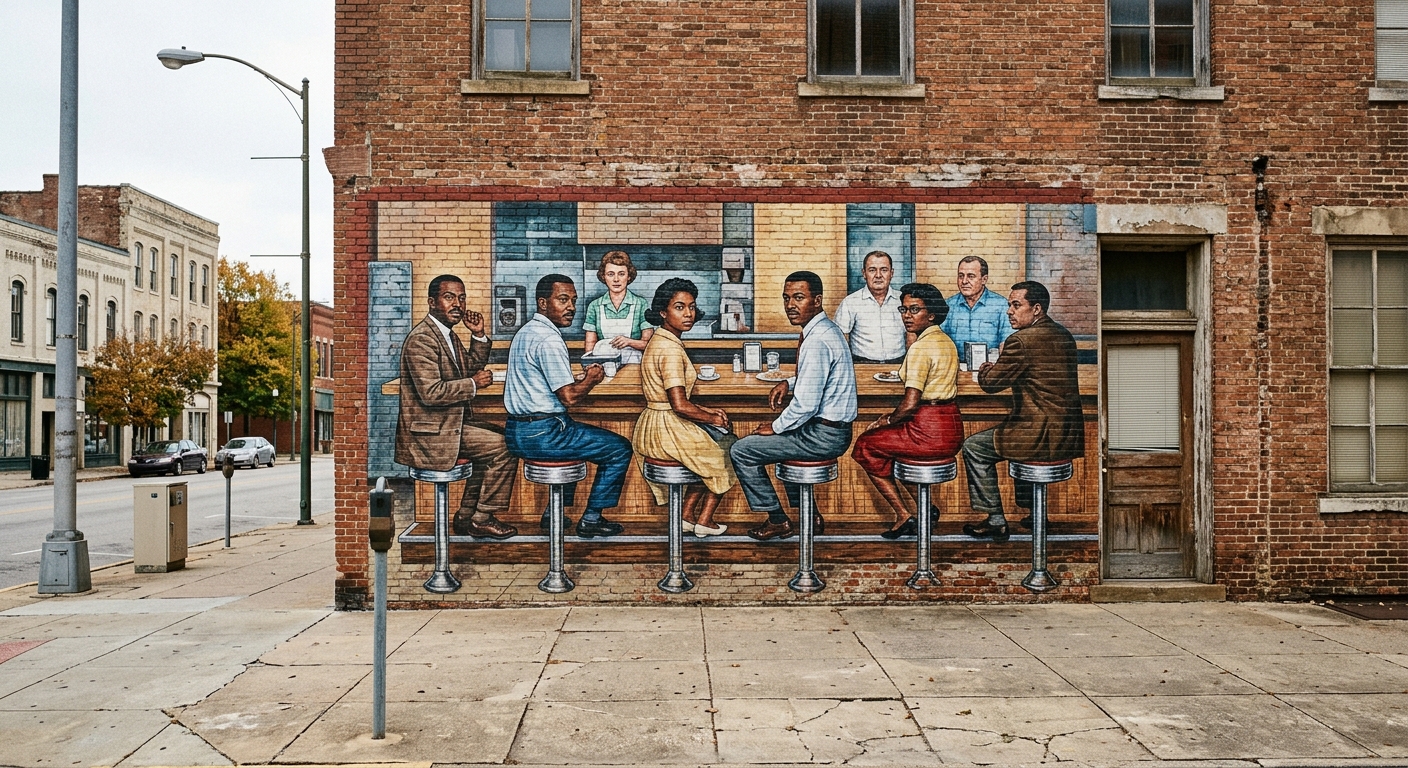
AI-generated illustration; not a photograph of the reported event.
- calendar_today August 17, 2026
Tennessee—The legacy of John Lewis resonates powerfully across Tennessee, where his dedicated activism transformed the ambitions of the civil rights movement into lasting institutional progress. Particularly in Nashville, Lewis’s visionary efforts after the groundbreaking lunch counter sit ins ensured that nashville desegregation did not lose momentum, serving as a catalyst for both local and national change.
The Legacy of John Lewis in Nashville
Long before achieving national prominence as a congressman and leader, John Lewis played a central role in sustaining the civil rights movement at the local level. After the celebrated lunch counter sit ins, which electrified the region and advanced the cause of nashville desegregation, Lewis galvanized activists to keep moving forward. Working alongside community leaders, he fostered a climate in which local activism could flourish despite ongoing challenges.
Lunch Counter Sit-Ins: A Defining Moment
The famous 1960 lunch counter sit ins in Nashville were pivotal in challenging segregation laws. Lewis emerged as a principal organizer—encouraging students and residents to join peaceful protests. These demonstrations, essential components of the wider civil rights movement, eventually helped dismantle Jim Crow practices throughout the city and inspired similar efforts around Tennessee and beyond.
Freedom Riders and National Significance
The city soon became central to the broader national movement, partly due to the influence of the freedom riders. John Lewis’s participation as a leader of the freedom riders not only highlighted the courage of Tennessee’s activists but drew national attention to the importance of the Nashville civil rights struggle. The experiences of Lewis and his colleagues with the freedom riders continue to inspire Tennessee’s citizens and institutions.
Institutional Change: The Metro Human Relations Commission
One of the most significant outcomes of Lewis’s activism was the founding of the Metro Human Relations Commission. The article and recent podcast from Nashville Public Radio examine how Lewis’s leadership helped lay the foundation for the metro human relations initiative. This commission remains at the center of Nashville’s efforts to promote equity, improve community relations, and ensure that civil rights remain a local priority.
Art and Remembrance: The John Lewis Mural
As a tribute to his enduring influence, a john lewis mural now adorns downtown Nashville. The artwork, which features Lewis and the freedom riders, serves as a visual reminder of the sacrifices and triumphs of the civil rights era. Local residents and visitors frequently visit the mural, which has become both an educational resource and a symbol of Nashville civil rights history. Its presence links Tennessee’s past to the present and the ongoing pursuit of justice.
Media Coverage and Community Updates
The recent podcast episode from Nashville Public Radio, hosted by Nina Cardona and edited by Tony Gonzalez, explores Lewis’s impact in detail. The episode also provides timely local activism updates, including news about the return of the band Hovvdy, further demonstrating how the legacy of civil rights efforts continues to intersect with daily life across Tennessee.
Continuing the Legacy of Justice
In reflecting upon John Lewis’s outsized role in Tennessee civil rights, community leaders and residents recognize the transformative impact he achieved. From his pivotal involvement in the lunch counter sit ins and the freedom riders to the creation of the metro human relations commission, his work set a standard for both nashville desegregation and broader social progress. Today, institutions and citizens alike draw inspiration from Lewis’s dedication, ensuring that his legacy continues to inform and strengthen Tennessee’s pursuit of equality and justice.