- calendar_today August 23, 2025
.
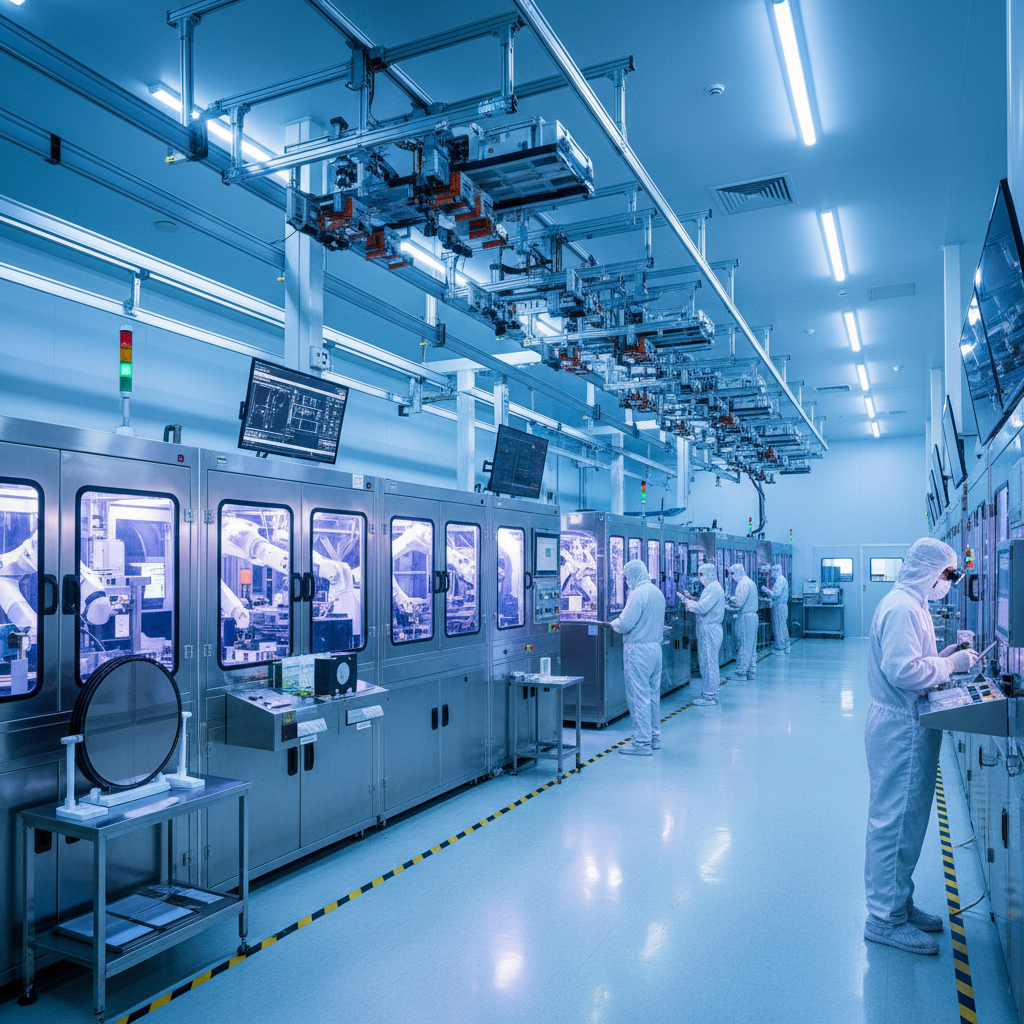
President Donald Trump just made the federal government Intel’s biggest shareholder. The president authorized the government to take a 10% stake in the American chipmaker, which is having a rough time of it these days. It’s a move that runs against long-held Republican economic principles and has outraged conservatives who usually support the president.
Trump has defended the deal as a “beautiful thing” for the U.S., a “smart deal” that will make America “richer and richer.” He also indicated it will not be the last such deal. “I hope I’m going to have many more cases like it,” Trump said in a rally in New Hampshire on Wednesday. “I’m going to be doing that, on a big basis, because I like that concept.”
That “concept” has at times been known as industrial policy. It’s a system in which the government doesn’t just sit on the sidelines and allow businesses to make their own decisions, but, in cases where it thinks a particular industry is critical, makes direct investments in or otherwise directs how those businesses are run. It’s something the U.S. government has occasionally tried before, but rarely on a broad scale, and Trump’s move has prompted conservatives to ask the obvious question: Is this socialism?
Socialism, over the years, has been variously defined by opponents and supporters, but one aspect that’s been in it for a long time is government control of the means of production for the good of society. By that measure, Trump hasn’t done much more than what goes on in China or Russia, as one editorial put it.
If Trump had done this to a bank or airline, conservatives might not have made such a fuss. When Barack Obama 2008 2009 took over Chrysler and General Motors, many conservatives worried that the financial crisis was about to end capitalism as we know it, but what Obama did to those companies was portrayed by conservatives at the time as a temporary rescue of “iconic” American brands.
If Obama had announced a 10% stake in Intel, Trump allies argue, Fox News would have called it communism.
Trump, naturally, sees things differently. “This is not a bailout. This is not a loan. We invested in Intel. It’s a little bit different,” Trump said in New Hampshire. The president also noted that he converted nearly $9 billion in grants — money already promised to the company under President Joe Biden’s bipartisan Chips Act — into stock for the government. By his calculations, the move created $10 billion to $11 billion in value for U.S. taxpayers up front. “Why are ‘stupid’ people unhappy with that?” he asked.
The most prominent conservatives who have criticized Trump have suggested he was selling out one of America’s proudest companies. “I was very, very uncomfortable with that idea,” Trump’s former top economic adviser Larry Kudlow said on Fox Business. Steve Moore, a less formal adviser, was more direct: “I hate corporate welfare. That’s privatization in reverse. We want the government to divest of assets, not buy assets. So terrible, one of the bad ideas that’s come out of this White House.”
An editorial in National Review, a leading conservative magazine, went further, warning that “government shouldn’t get into the chip business.” Senator Thom Tillis said the deal could leave Intel as a “semi-state-owned enterprise a la CCCP,” a reference to the Soviet Union. Rand Paul was blunter on social media: “Wouldn’t the government owning part of Intel be a step toward socialism? Terrible idea.”
Others, however, have praised Trump’s move. Progressive Senator Bernie Sanders celebrated it. Howard Lutnick, Commerce secretary, raced to the president’s defense, telling Laura Ingraham that “That is not socialism. That’s the best businessman in the United States of America in the Oval Office doing fair things for us.”
Intel has also pushed back. The company was required by the SEC to file a statement explaining what the deal means for shareholders. The statement warned that the deal could deter the company from future government grants, affect international sales, and increase regulation on company activities. Intel, which has been struggling and announced a 15% reduction in force in January, has a current market value of about $110 billion. (The market cap has fallen 50% since the beginning of 2024, but shares did rise 4% immediately following Trump’s announcement.) In the Journal, one person familiar with Trump’s thinking told reporters that Trump demanded that Intel CEO Lip-Bu Tan resign over past connections to China, only to rescind his demand after a personal White House visit. “I liked him a lot, I thought he was very good,” Trump said.
Analysts say the government should have little say over Intel operations, as the stock will be non-voting and the U.S. will have to follow Securities and Exchange Commission regulations. But when the president of the United States becomes the biggest shareholder in a company, he is going to have some sway, whether he wants to or not.
The Intel deal is different from Obama’s auto rescue because of one simple fact. Obama rescued companies that were failing so he could get them back to taxpayers, having spent as little money as possible. Trump, by contrast, is plowing money into a company that is clearly in trouble in the hopes that the government can force it to turn a profit.
If Intel rights itself, Trump will take credit for safeguarding the technology leader. If it continues to stumble, taxpayers will take the losses. Trump, meanwhile, has promised more of this sort of deal in the future, and the question of whether this is socialism or capitalism or just plain Trumpism will only grow louder.
At the very least, it is a fundamental shift in the relationship between the federal government and American business, and a sign of how far Trump has pushed the Republican Party off its economic moorings.