- calendar_today August 17, 2025
Former U.S. President Donald Trump’s remarks against renewable energy were an odd detour at a press conference otherwise dedicated to European Union trade. But beyond their theatrical nature—claims of a “con job” by which wind turbines drive whales “loco” and kill birds—comments by Trump on wind power are part of a global pattern that has long involved conspiracy theories against renewable energy.
While calling wind turbines “windmills,” a more common term among climate deniers, Trump claimed that not only are they killing the environment, but also “becoming very dangerous to people.” If soundbites from the Trump administration are news for their bombastic nature, those around wind energy in particular are part of a long tradition of anxiety and pushback toward low-carbon technologies. The roots and rise of wind conspiracies.
Trump’s line of attack on wind energy and related renewables is neither new nor confined to the U.S. The growing prevalence of wind power and solar photovoltaic, since the 1970s, was paralleled by a raft of unsubstantiated claims about their supposed impact on the environment and public health. A relatively recent example of a theory is that wind turbine farms are poisoning groundwater or even the soil itself. In reality, there is no evidence to support those conspiracy theories. Another was the myth of so-called “wind turbine syndrome,” which lacks any credible medical or scientific basis and has been labeled a “non-disease” by many medical experts. The climate denier’s playbook.
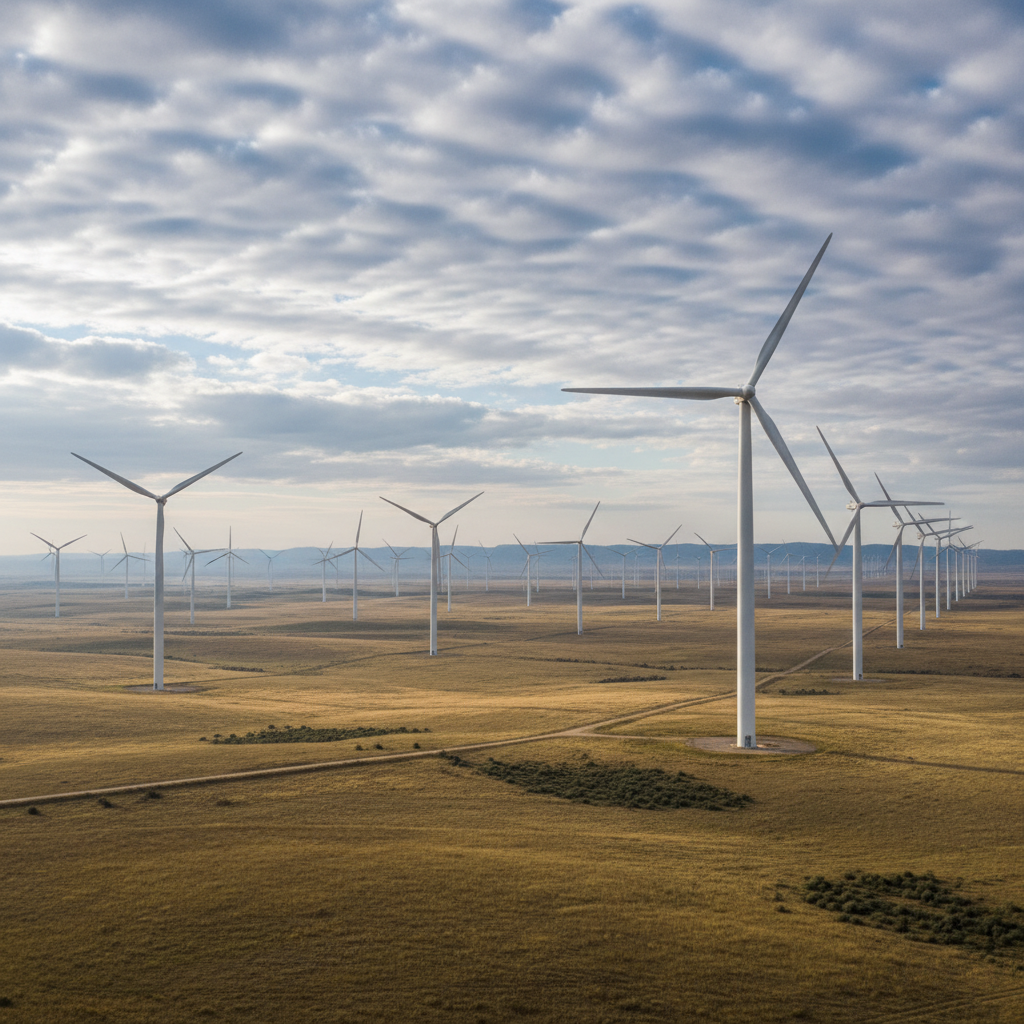
For many, the threat of wind turbines stems from their very visibility. Wind turbine farms are sited near population centers on ridgelines or open plains. That is in stark contrast to coal mines, oil and gas fields, or nuclear power plants, which are usually far from public view. Because of that high visibility, wind turbines are an easy target for criticism or conspiracy theories.
Academic studies confirm the anecdotal evidence. A study led by Kevin Winter and published in the journal Energy Research & Social Science found that in Germany, conspiracy thinking was “a much better predictor of anti-wind attitudes than demographics such as age, gender, education level, and political orientation.” Similar results from more recent surveys in the U.S., U.K., and Australia all found that those who are more likely to believe in conspiracy theories about climate change, government control, or energy security were also more likely to see wind turbines as a bad thing.
In a 2021 survey in the U.K., more than one-quarter of respondents saw wind turbines as part of “a plan to take away our freedoms.” For people who already believe such ideas, countering with evidence that wind farms do not poison the groundwater or cause mass blackouts is rarely effective. As Winter and colleagues put it, wind turbine opposition is “rooted in people’s worldviews,” not just misinformation.
Wind farms are symbolic in that their sheer scale is hard to ignore and, therefore, an easy target for critics or those imagining conspiracies about power. At one extreme, they can be the perfect metaphor for modernity, with one pro-wind turbine group calling them beacons of “progress, innovation, and climate action.” On the other hand, the turbines can represent government overreach, loss of control, and unwelcome change.
Climate Change: 5 Myths on Wind Power Health Risks That Have No Basis
Wind turbines’ visibility means that their development is politicized, a symbolic battleground. Beneath the noise of those specific conflicts, there are some bigger cultural stories at play. The easy profitability of fossil fuels has enabled an age of excess and prosperity. As such, some people find it difficult to accept the environmental cost, almost like a “cognitive dissonance,” according to one scholar who described it as “anti-reflexivity.” The fact that Trump’s rhetoric often harks back to an idealized era of coal, oil, and gas neatly fits into that frame.
The debate also plays into identity politics, with climate change denial sometimes equated with effeminacy or weakness in some corners of online culture, such as in parts of the so-called “manosphere.” From that vantage, not just Trump but many older baby boomers, white heterosexual men in particular, find the changing nature of the world around them a very disorienting experience. In the energy transition, they are no longer the most important players in their industries or communities. That dynamic of identity politics also shows up in Trump’s repeated attacks on “globalism.”
Taken together, these cultural dynamics explain why Trump’s barbs at “windmills” fit easily with supporters who feel that the energy transition is a threat to take away their freedoms. Trump, as ever, chooses colorful and over-the-top imagery to get the point across—whether about mass whale beachings, bird death, or supposed health impacts, whose fact-checking reads like a wind conspiracy theory bingo card. The theatrics are nothing new, but the energy transition is.