- calendar_today August 20, 2025
Tennessee is emerging as a critical force in America’s electric vehicle (EV) economy. Anchored by massive investments from Ford, General Motors, and battery manufacturers, the state’s automotive sector is transitioning toward a cleaner, high-tech future. In this context, local investors—from Nashville financiers to Chattanooga engineers—are asking a key question: Does Fisker Inc. (NYSE: FSR) have a place in Tennessee’s EV investment landscape?
While Fisker once promised disruption in the EV market, it entered the second half of 2025 facing production delays, financial uncertainty, and increasing competition. However, Tennessee’s rapid transformation into an EV manufacturing hub may offer fresh relevance to Fisker’s long-term prospects—if it can realign its strategy to fit the region’s priorities.
A 2025 Crossroads for Fisker
Fisker’s momentum in early 2025 has slowed. Although the Ocean SUV drew attention for its sustainability credentials, persistent production issues have dropped the company’s valuation below $1.3 billion, far from its 2021 high above $7 billion.
In Tennessee, where Ford’s BlueOval City project near Memphis and GM’s expanded Spring Hill plant are reshaping the industrial landscape, Fisker’s absence is notable. The company currently manufactures overseas through Austria’s Magna Steyr, meaning it does not benefit from federal tax credits that incentivize U.S.-made vehicles—an important distinction for investors tracking state and national policy.
Forecasting Fisker’s 2030 Price Path
Fisker’s stock trajectory through 2030 remains uncertain, but analysts generally identify three potential outcomes:
Bull Case: If Fisker ramps up Ocean production, delivers the Pear and Alaska models on time, and expands market share, annual sales could exceed 200,000 vehicles. That could generate $6–$8 billion in revenue and push the stock into the $25–$30 range. For Tennessee investors focused on the state’s EV boom, such as those involved with battery startups or supplier networks, this would signal a strong growth story.
Base Case: A more measured path would involve steady production of 75,000–100,000 units per year, translating to $3–$4 billion in annual revenue and a stock price of $8–$12. This could appeal to Tennessee-based retail investors seeking exposure to clean tech within a diversified portfolio.
Bear Case: If Fisker continues struggling with execution, sales may stall, and investor confidence may erode. In this case, revenue might remain below $2 billion annually, and the stock could hover in the $3–$5 range, less attractive for conservative portfolios in cities like Knoxville or Memphis.
Industry Context: Tennessee’s EV Surge and Domestic Production Advantage
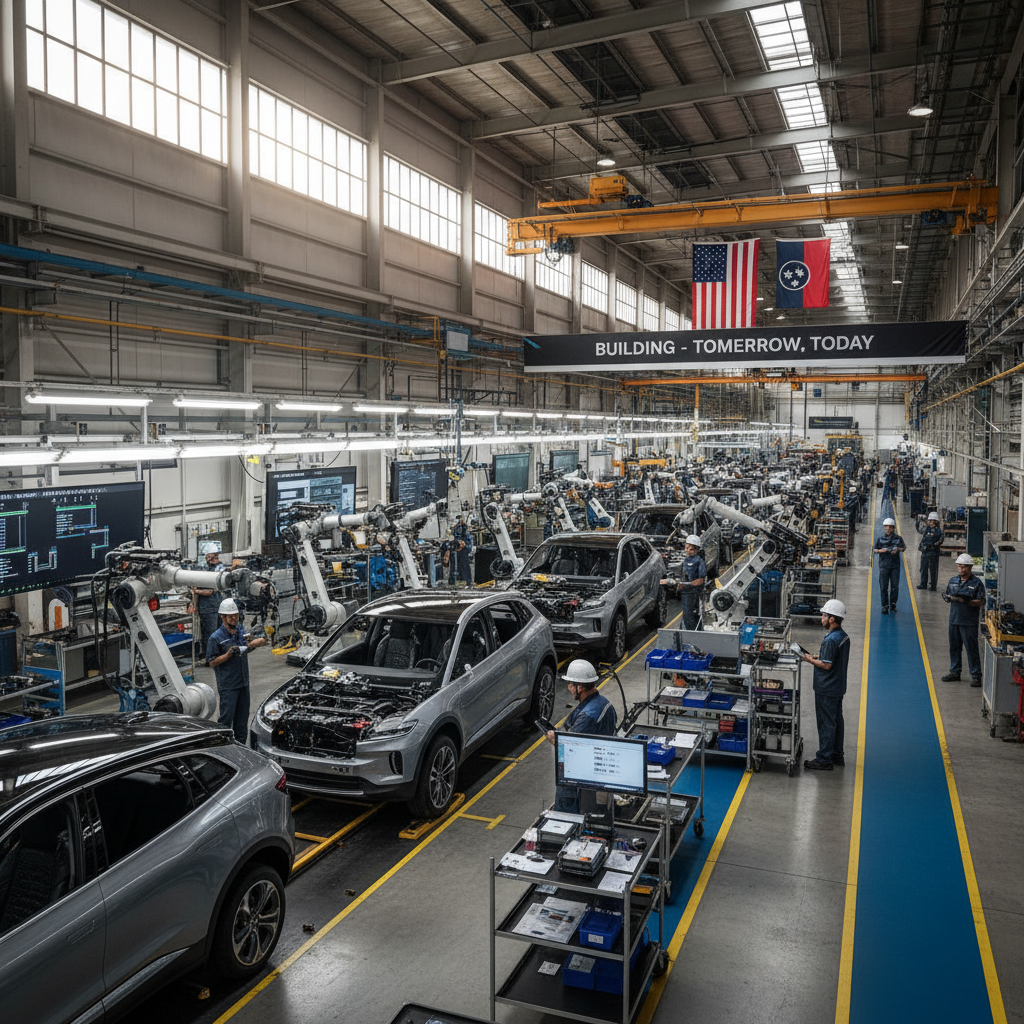
Tennessee’s strategic location, skilled workforce, and pro-business environment have made it a magnet for EV investment. Ford’s $5.6 billion BlueOval City development includes EV assembly and battery production, while GM’s Spring Hill plant is now a centerpiece of its Ultium battery strategy.
These domestic operations qualify for Inflation Reduction Act (IRA) tax credits, giving them a competitive edge in pricing and policy alignment, particularly important in a value-conscious market like Tennessee. Fisker’s reliance on overseas manufacturing puts it at a disadvantage in this landscape, both for consumers and investors.
To close the gap, Fisker may need to consider U.S.-based production partnerships, potentially even tapping into Tennessee’s growing EV ecosystem to gain regional relevance and federal compliance.
Investor Sentiment and Tennessee’s Financial Climate
Tennessee’s investment environment includes a mix of conservative investors, corporate pensions, and growing ESG interest from academic institutions and startups. While institutional sentiment toward Fisker cooled in 2025 due to delivery delays and cash flow concerns, tech-forward professionals in cities like Nashville and Oak Ridge remain cautiously optimistic, particularly if Fisker can demonstrate operational improvements.
Success in the fourth quarter of 2025 and a smooth launch of the Pear model in 2026 could be key to re-engaging regional investor interest. A public commitment to establishing U.S.-based production—potentially in the Southeast—would further align Fisker with Tennessee’s investment priorities.
Looking Ahead: The Road to 2030
Tennessee is positioning itself as a leader in the next generation of automotive manufacturing. Billions in investment, thousands of new jobs, and government incentives are reshaping the economic landscape—and local investors are taking note.
Fisker’s path forward will require more than visionary design. To resonate with Tennessee’s increasingly tech-savvy and policy-conscious investor base, it must deliver vehicles at scale, secure strategic partnerships, and transition some production to U.S. soil. That alignment could turn it from a volatile speculative stock into a viable growth story in a state at the center of EV progress.
For now, Fisker remains a watchlist stock for Tennessee investors—one with potential upside but requiring cautious, performance-based trust.