- calendar_today August 27, 2025
Another serious air leak on the International Space Station (ISS) has led NASA to postpone a commercial astronaut mission launch. The space agency has postponed Axiom Mission 4 which planned to transport four private astronauts to the orbital lab due to an acknowledged problem but has shared very few details with the public. Sources confirm that behind the scenes growing concern exists about the ISS air leak situation as the space station nears its 30th year of operation.
The Return of a Familiar Problem
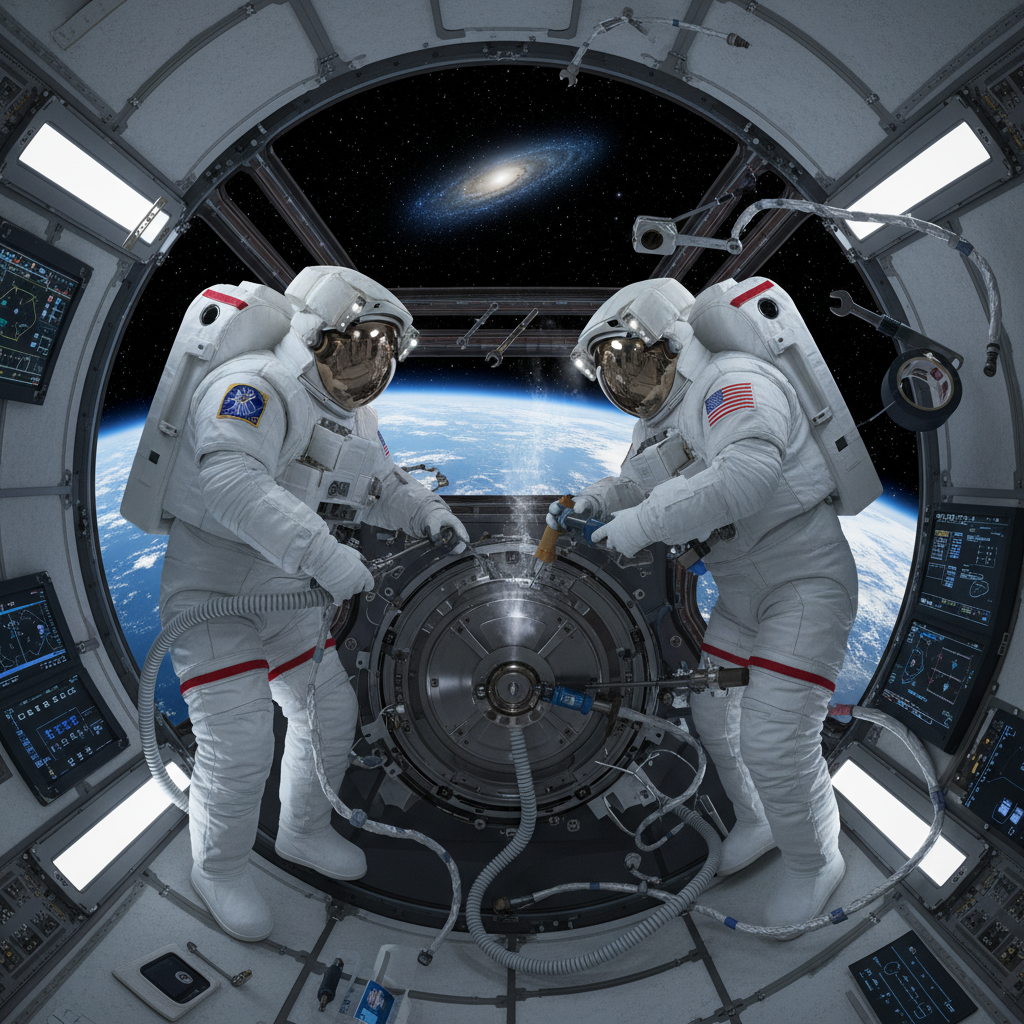
The ISS has previously experienced leaks as part of its operational history. NASA and Roscosmos have been monitoring a continuous slow leak inside the Russian-built Zvezda service module since 2019 which is one of the oldest parts of the station launched in 2000. The PrK transfer tunnel which links Zvezda to the docking port for Soyuz crew vehicles and Progress resupply missions has been identified as the specific problem area.
Russian cosmonauts have carried out multiple repair attempts on the small cracks found in the PrK over the last few years. The team’s efforts succeeded in reducing the leak to an acceptable level of two pounds of air per day but did not completely fix the issue. To temporarily stop the air leak, Russian cosmonauts found that keeping PrK’s hatch closed whenever docking was not taking place was the best strategy.
Roscosmos confirmed earlier this month that their latest repair efforts had successfully sealed the PrK module. NASA released a statement confirming the cessation of the leak rate inside the module. Initial reactions to the news deemed it a success for continuous maintenance work. The initial positive outlook diminished when sensor readings indicated a continuing reduction in the station’s total air pressure.
According to insiders who know the situation, experts now think the hatch seals themselves are causing the problem. Air seems to be escaping from the station’s main body to the PrK through the hatch despite PrK maintaining its internal pressure. The PrK maintains pressure because its tight seal effectively hides the fact that the ISS continues to lose air systemically. The leak has been fixed within the module but the station continues to experience air loss.
Structural Fatigue: A Growing Threat
The leak is not yet critical but its continuing presence reveals structural fatigue as the underlying serious problem. Engineers express concern about “high cycle fatigue” because this condition occurs when metals such as aluminum experience repeated stress throughout their use. The concept operates like bending a wire until it snaps after multiple bends.
Since its launch in the late 1990s the ISS remains in orbit while withstanding daily temperature changes, pressure variations, and mechanical loads. Repeated stress over time turns even aerospace-grade aluminum into unpredictable brittle material. The most critical issue according to NASA’s 5×5 risk matrix evaluation is structural cracking because the matrix evaluates both likelihood and impact factors. The agency considers structural cracking as its top trackable concern.
This is not just a theoretical fear. Aloha Airlines Flight 243 experienced uncontrolled decompression in 1988 because metal fatigue went undetected. The fuselage unexpectedly split open, leaving passengers unprotected as they faced the open sky. The crew successfully landed the aircraft but the event stands as a sobering warning about the dangers of undetected fatigue.
The aging ISS could soon have components that reach critical wear limits. The constant discovery of leaks near one module prompts concerns about potential safety risks from widespread fatigue.
NASA postponed the Axiom-4 mission that was originally planned to launch on Thursday because of these developments. NASA and Roscosmos will receive more time to assess the situation and figure out if extra troubleshooting steps are required due to the mission delay.
NASA has not yet provided detailed information or scheduled any press briefings in response to increasing questions from journalists and the public. The agency’s only public comment to date has been: The International Space Station crew continues to operate normally in a safe environment.
For now, that remains true. The crew members on the space station remain protected while their routine operations proceed uninterrupted. The rising number of unexplained leaks alongside potential deeper structural problems has increased the urgency to determine how long the ISS can remain operational.