- calendar_today August 28, 2025
Behind the Music of KPop Demon Hunters
An animated take on K-pop culture has captivated audiences and rocketed to the top of Netflix’s global charts in its first week of release in June, as fans in multiple countries flocked to KPop Demon Hunters. By its second week in June, the film had been streamed more than 33 million times. It is already in the top 10 in 93 countries, according to Netflix. It is also number two in the global Netflix rankings.
Fans have also begun making fan art in anticipation of a sequel. Enthusiasm for a sequel is among the trending demands from KPop Demon Hunters fans online.
The demon hunter musical has also been popular on music streaming charts since the June 20 release of the film. Two KPop Demon Hunters songs are in the top five on Billboard’s Hot 100 singles chart, and five more are among the top 40. These songs are performed by two fictional bands featured in the movie: Huntr/x, a good-natured all-female group, and their rivals, Saja Boys. The musical fantasy film sees the all-female Huntr/x — Rumi, Mira, and Zoey — balance their job as world-famous pop stars with their secret demon-hunting work, using their powers to save the world from forces of evil. The clashes between the bands are interwoven with concert performances, slick action, and a coming-of-age story about friendship, trust, and the power of being your true self.
The music in KPop Demon Hunters is part of what has made the animated musical such a sensation, particularly outside Korea. Maggie Kang, one of the film’s directors, is a Korean-Canadian who said she was inspired to make KPop Demon Hunters from the real-life K-pop idols she grew up with and loved. “It is natural that the characters in the film love music and sing, because music is also a key theme in the film itself, where it’s almost a means to fight off evil forces,” Kang told The Diplomat. “It’s one of the reasons our film is different from other movies and is so loved by fans, because K-pop is so naturally interwoven into the storytelling and the plot.”
The authentic visual aspects and storyline in the film have also been popular. But the music is what’s really made KPop Demon Hunters a phenomenon, according to fans and experts.
Amanda Golka, a Los Angeles-based content creator and artist who isn’t particularly familiar with K-pop, says she has become hooked. “I have been blasting the soundtrack from Spotify every time I’m in the car,” she says. “It’s fascinating how music can be such a universal language. It breaks all these boundaries.”
Tradition Meets the Global K-Pop Wave
Cultural representation in the film has also been one of the keys to KPop Demon Hunters’ success, which has been notable not only in Korea but around the world. K-pop, K-dramas, and Korean cinema have already gone mainstream in the US and other Western markets, but the Netflix film goes further. It is set in modern Korea and weaves in slices of daily life, from traditional dining customs to familiar scenes set at Seoul’s ancient city walls, hanuiwon clinics, public bathhouses, and Namsan Tower. The incorporation of these details and nods to Korean history and folklore go beyond stereotypical, creating a sense of familiar cultural representation that many Korean viewers rarely see on the big screen.
To capture these elements, the film’s production team went to Korea to take photos, observe the streets, visit folk villages, and study traditional clothing and cultural aspects in person. The animation is also highly culturally accurate, with some Korean pronunciation subtleties and distinctively Korean reactions to events in the film. In some scenes, Korean words or song lyrics are used.
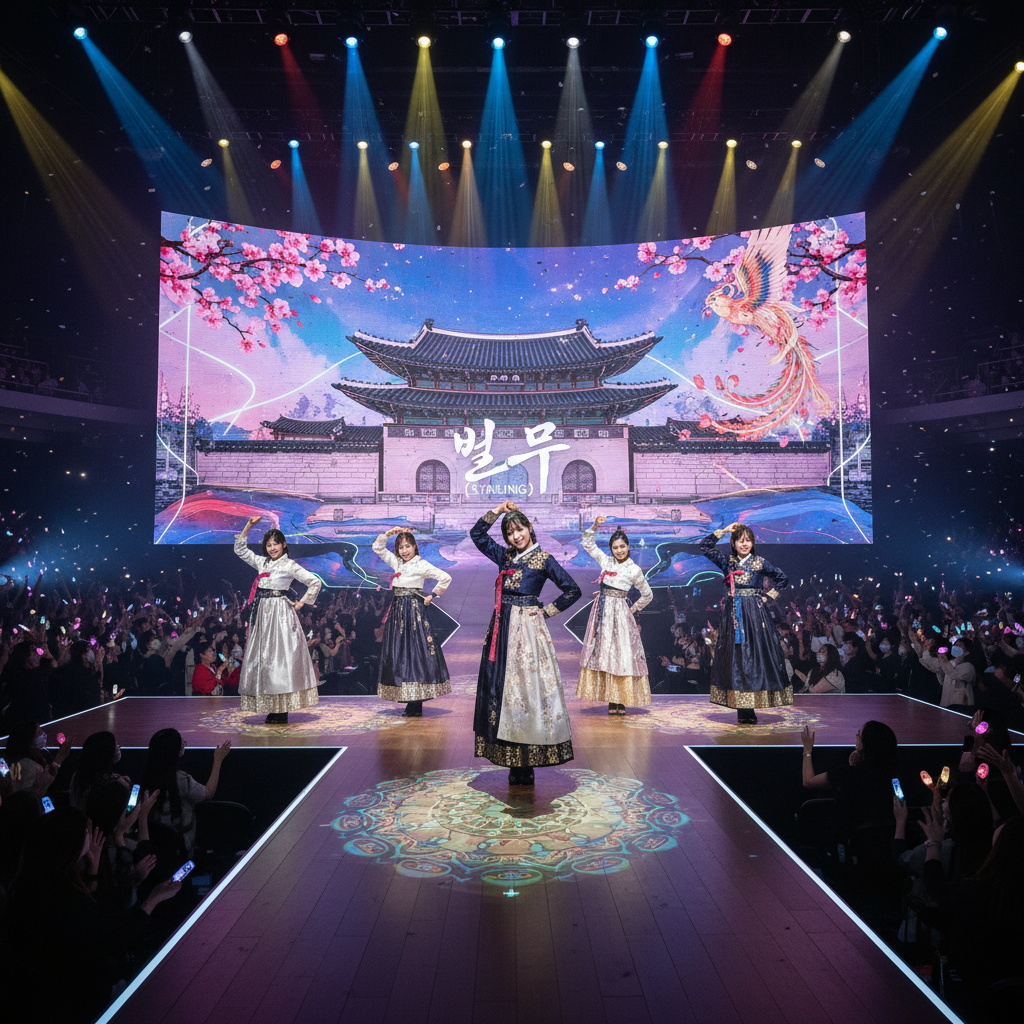
In addition to setting, KPop Demon Hunters features a realistic look at the world of K-pop fandom itself, from fan signing events to the glow of fans’ light sticks, kalgunmu, or perfectly synchronized dance routines, and Korean placards held by fans at concerts. The story incorporates references to the entire culture of K-pop, rather than centering around one group or era of the Korean music industry, allowing casual viewers to follow the plot while also rewarding devoted fans with more niche or historical references.
The film also weaves in aspects of Korean folklore and traditional culture into its fantasy action. Huntr/x’s swords and fans, for instance, recall the ritual tools of Mudang, Korean shamans who dance to the sound of the janggu drum, while the malevolent Saja Boys resemble images of the Korean Grim Reaper. Korean folk and mythology symbolism appear in Dangsan trees and Dokkaebi goblins in the film, as do more whimsical folk-inspired Huntr/x and Saja Boys mascots — Derpy the tiger and Sussy the magpie, symbols of guardianship and good fortune, respectively.
Fundamentally, though, KPop Demon Hunters is a story about coming into your own identity and accepting yourself. “The struggle with who they are and accepting themselves has been a common theme I’ve heard from people resonating with the film,” Golka says. “Your friends may not understand right away, but they do love you and they will figure it out. I think that has resonated with people.”
Mixing K-pop’s cutting-edge music with elements of Korean culture and an uplifting message about identity, KPop Demon Hunters has proven itself to be more than a simple animated musical for kids or fans of K-pop. The film is helping to build a bridge of pop culture across borders, at home in Korea and abroad. For now, it’s both a Netflix hit and a chart-topping soundtrack — and based on the enthusiasm of its fans, only the start of the story.