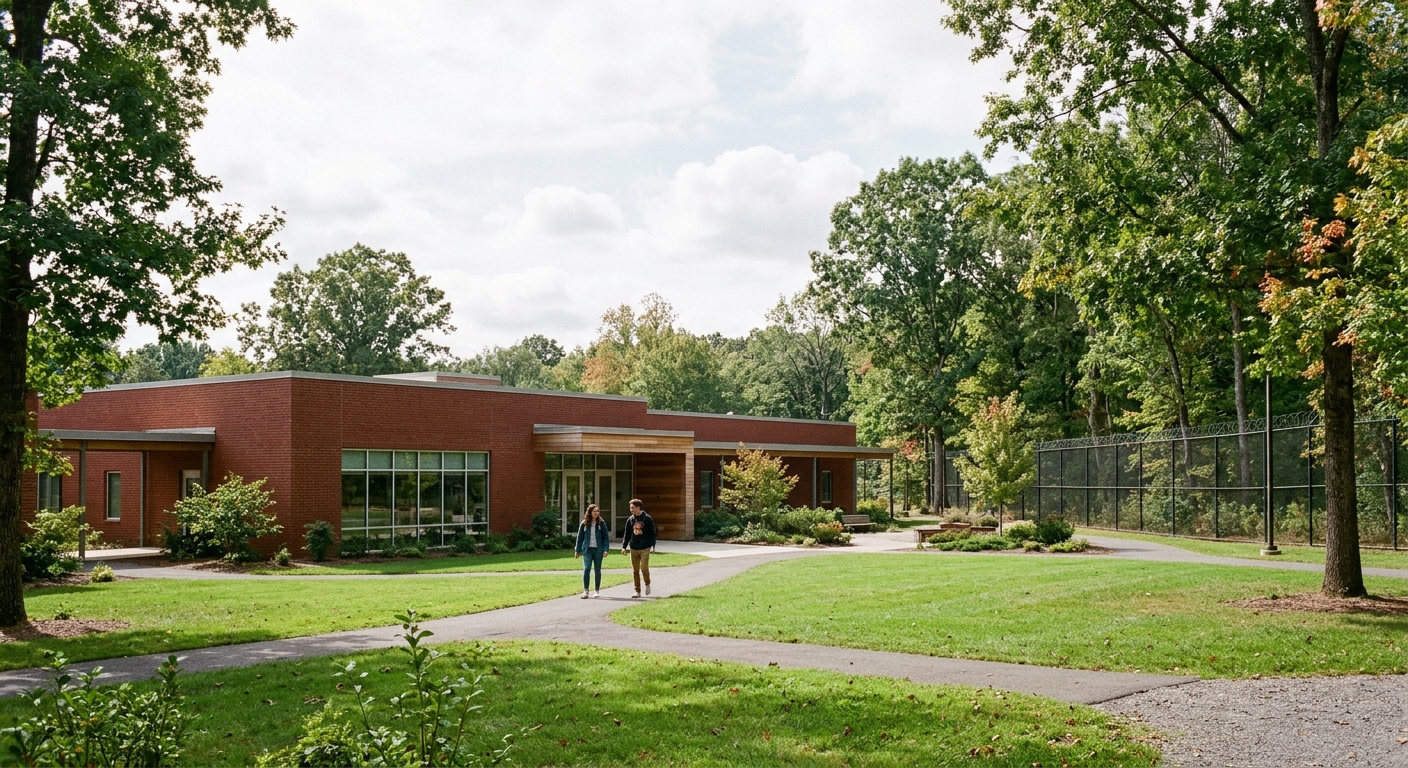
AI-generated illustration; not a photograph of the reported event.
- calendar_today November 9, 2026
Tennessee’s Approach to Juvenile Justice Sparks Debate
As states across the nation reconsider how they address youth crime, Tennessee is moving forward with the construction of two large youth correctional facilities. This approach contrasts with growing national trends that favor community-based and rehabilitative programs over traditional incarceration for juvenile offenders.
New Youth Development Campuses Underway
The Tennessee Department of Children’s Services (DCS) is investing in two substantial youth development campuses: one located at North Nashville’s Woodland Hills, and another, the John S. Wilder Campus, in Fayette County. DCS officials emphasize that these are not traditional prisons but modernized campuses designed to look more like rehabilitation centers, including dedicated spaces for therapy, technology and arts education, and outdoor courtyards.
"We’re modernizing our existing Youth Development Campuses to provide safe, secure environments that have been designed around the needs of the youth we serve," DCS stated. The modernization aims to improve treatment, education, and rehabilitation for young people in custody.
Divergent Views on Correctional Investments
While DCS frames these new facilities as an effort to enhance rehabilitation, some Tennessee lawmakers remain critical. Representative Ronnie Glynn, a Democrat, voiced strong opposition to the $360 million plan, saying, "We’re not doing what we need to do here in Tennessee with our juvenile kids." Glynn advocates for increased mentorship and community initiatives rather than building what he sees as new juvenile prisons, suggesting state resources would be better allocated to programs involving adults in mentorship roles.
Comparison With Other States and Mental Health Screening
Tennessee’s approach differs notably from states like Massachusetts, where 93% of juvenile facilities conduct mental health screenings, versus just 53% in Tennessee, according to 2022 Department of Justice data. DCS contends that their policies require medical and mental health assessments, including suicide risk screening, upon a youth’s admission.
Some national experts point to models like Missouri’s, where juvenile rehabilitation centers are smaller, community-based, and family-oriented—a design implemented in the 1980s with significant reductions in repeat incarceration rates. Gail D. Mumford, formerly with Missouri’s Division of Youth Services and now with the Annie E. Casey Foundation, emphasizes that “one of the most important things in a young person’s life is their connection with family and community.”
Community-Based Models vs. Centralized Campuses
DCS acknowledges that Tennessee uses some small, community-based placements but argues that certain youth require more structured, secure settings. The department asserts that centralized campuses allow for better staffing, security, education, and access to specialized vocational and mental health services, which would be harder to offer in smaller facilities.
Nevertheless, critics worry that large, centralized facilities could separate youth from their communities, limiting family involvement and reducing opportunities for effective rehabilitation. Rep. Glynn underscored the impact of distance, asking, "How do I get there and see my child? If I’m in West Tennessee, East Tennessee, and this facility is in Middle Tennessee, my income level doesn’t allow me to just get up and go."
Looking Ahead: The Future of Juvenile Justice in Tennessee
DCS has declined to provide an on-camera interview prior to the ribbon-cutting of the new Youth Development Campus, but continues to defend its approach to youth rehabilitation. The debate over the best strategies for juvenile justice reform remains active, with Tennessee standing out for its commitment to larger correctional campuses amid broader national reforms favoring community-based alternatives.
Source: wkrn.com.