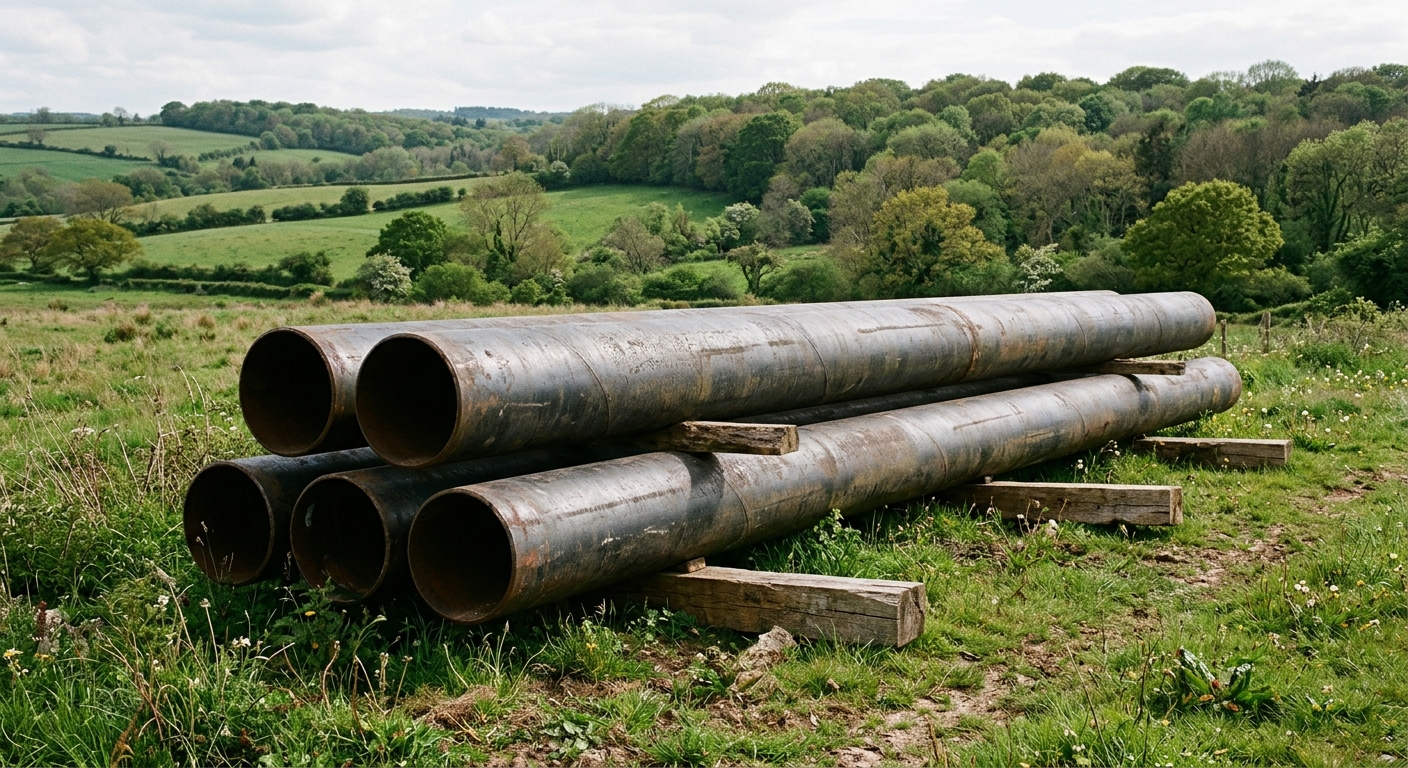
AI-generated illustration; not a photograph of the reported event.
- calendar_today October 31, 2026
Kinder Morgan Unveils Plans for Southeast Connector Pipeline
Kinder Morgan has announced a major new infrastructure project: a 150-mile methane gas pipeline traversing Tennessee, forming a key segment of the broader Southeast Connector initiative. The planned pipeline would be one of the largest constructed by the company in decades and is part of a proposed 470-mile route extending through Alabama, Georgia, South Carolina, and Florida.
Proposed Route and Capacity
The pipeline’s Tennessee route is set to run north to south, beginning in Sumner County, near Nashville, and stretching to Marion County, west of Chattanooga. The route may also pass through Macon, Trousdale, Smith, Dekalb, Cannon, Warren, Coffee, and Franklin counties.
Kinder Morgan expects the pipeline to transport at least 2.6 billion cubic feet of natural gas per day, with projections reaching up to 3.5 billion cubic feet. According to Shelley Robbins of the Southern Alliance for Clean Energy, this volume could power about 17 gigawatts of electricity — representing 45% of the Tennessee Valley Authority's (TVA) current electric capacity.
Despite its scale, the company has not publicly disclosed the pipeline's end customers, as several shipper agreements remain confidential.
Physical Characteristics and Safety Concerns
The proposed pipeline will have a 48-inch diameter—significantly larger than the 30-inch standard for most interstate pipelines and the usual maximum of 42 inches, based on U.S. Pipeline and Hazardous Materials Safety Administration (PHMSA) data.
Such scale raises safety concerns. Jasmine Vazin, deputy director of the Sierra Club's Beyond Dirty Fuels campaign, warned that the "blast zone," the area at risk in the event of a pipeline accident, could reach nearly half a mile. Historically, pipeline explosions have resulted in fatalities and extensive property damage; PHMSA records show 234 deaths and nearly $12 billion in damages from pipeline incidents since 2006. Kinder Morgan itself has experienced several serious incidents, including explosions in Reynosa, Mexico (2012), Coolidge, Arizona (2021), and Jackson County, Texas (2024), with 90 safety incidents and more than $53 million in property damage reported from 2013 to 2025.
Kinder Morgan maintains that safety is a top priority, citing measures such as 24/7 centralized monitoring, right-of-way inspections, advanced internal testing, corrosion protections, and emergency response plans.
Regulatory Landscape and Landowner Concerns
Tennessee currently lacks state-wide minimum setback regulations for gas pipelines, except in Memphis and Shelby County. In 2022, legislation was passed to prevent local governments from blocking fossil fuel infrastructure projects, including pipelines.
Property owners along the potential route in 10 Tennessee counties have begun receiving notifications from Kinder Morgan. Vazin highlighted that energy companies can acquire private property through eminent domain, a right granted to them since the 1940s, which limits landowners’ influence over such projects. She encouraged affected residents to connect with advocacy groups and seek resources, noting similar experiences in neighboring states.
Broader Context: Gas Infrastructure Expansion
The Southeast Connector is part of a nationwide expansion in fossil fuel infrastructure. According to an Environmental Integrity Project report, nearly 200 projects aiming to add over 17,000 miles of pipelines are underway, driven by increased gas exports and growing electricity use from data centers. In Tennessee, developers are planning substantial new gas-fired plants, both through the TVA and private operators.
National permitting and safety rules for pipelines have shifted in recent years, with federal agencies expediting reviews and relaxing some safety and environmental requirements. Critics argue these changes have reduced protections for landowners and the environment.
Next Steps and Project Timeline
The exact route for the Tennessee pipeline segment will be finalized after environmental studies and consultation with property owners. Kinder Morgan has set a target in-service date of late 2030 for the Southeast Connector project.
Source: wpln.org.