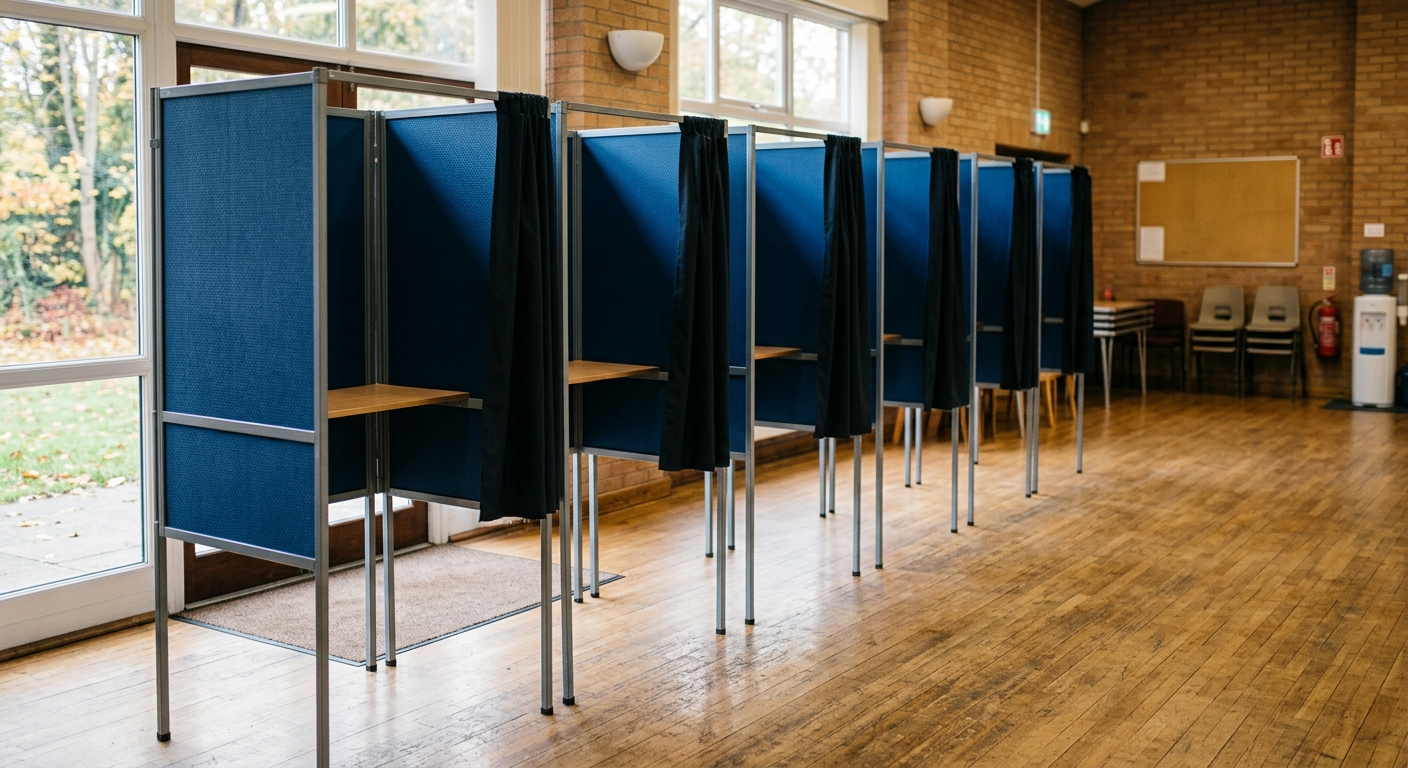
AI-generated illustration; not a photograph of the reported event.
- calendar_today October 11, 2026
WPLN Holds Public Conversation on Voting Process
On October 6, 2026, Nashville Public Radio (WPLN) organized a nonpartisan public event in its studio to address widespread questions and concerns about the voting process. The conversation, titled “Does My Vote Even Count?”, invited community members to engage in an open dialogue focusing on topics such as redistricting, ballot and voting machine integrity, and safety at polling locations during the midterm elections.
Panelists Address Key Voting Concerns
The panel featured Marianna Bacallao, Power and Equity Reporter with Nashville Public Radio, and John Richardson, Administrator of Elections for Davidson County. The discussion was moderated by LaTonya Turner, WPLN’s News Editor. Attendees were able to ask questions directly about various aspects of the electoral process and receive detailed answers from both the journalistic and election administration perspectives.
Preparing to Vote: Identification and Ballot Access
John Richardson emphasized the importance of preparing to vote by following the steps he abbreviated as A, B, C, and D:
- A: Appropriate Identification – Voters must bring a valid Tennessee ID, such as a driver’s license or a federal identification like a passport, to the polls.
- B: Ballot – Each Davidson County household receives a sample ballot in the mail, an extra measure unique to Davidson County in accordance with Tennessee election law.
- C: Check Voter Registration – Voters should verify information on their canary yellow voter registration card to confirm their polling location for Election Day.
- D: Determine Voting Method – Individuals can vote early, by absentee ballot, or on Election Day, and should have a clear plan for when and how they’ll cast their ballot.
Richardson also noted that Tennessee law allows voters to bring written notes or mark their selections in the GoVoteTN app to help during voting, though taking photos or making recordings at polling places is prohibited.
Polling Location Security and Election Law
Concerns about the presence of law enforcement or federal agents at polling locations were clarified by Richardson. He cited Tennessee Code Annotated 2-7-103-C, which prohibits police or other law enforcement officers from remaining within ten feet of a polling station or entering unless requested or to vote or make an arrest. He encouraged voters to report anything unusual to the officer of elections present, who is trained to handle such situations.
Richardson also mentioned the involvement of outside groups like the Guardians of Democracy, an attorney organization that monitors polling locations to support voters and report any issues to the election commission.
Ballot Integrity and Handling Errors
Bacallao and Richardson discussed ballot integrity and addressed concerns about misunderstandings or potential errors. Bacallao explained that most issues are not due to intentional fraud. Richardson added that if a voter makes a mistake on a ballot, as long as it is not submitted, poll workers can void the ballot and issue a new one. Destroyed ballots are kept for 22 months as required by Tennessee law.
Voter Information Sharing and Election Security Measures
In response to a question about whether Tennessee voter information had been shared with the Trump administration, Richardson confirmed that some information was provided according to state decisions and encouraged individuals to request specific details from the coordinator of elections or through an open records request with the Metro Clerk’s Office.
Discussing election security and potential voter fraud, Richardson emphasized the extensive testing and verification of voting machines in Davidson County. Each piece of election equipment is thoroughly tested and any malfunctioning machines are removed and repaired before being used in an election.
Source: wpln.org.