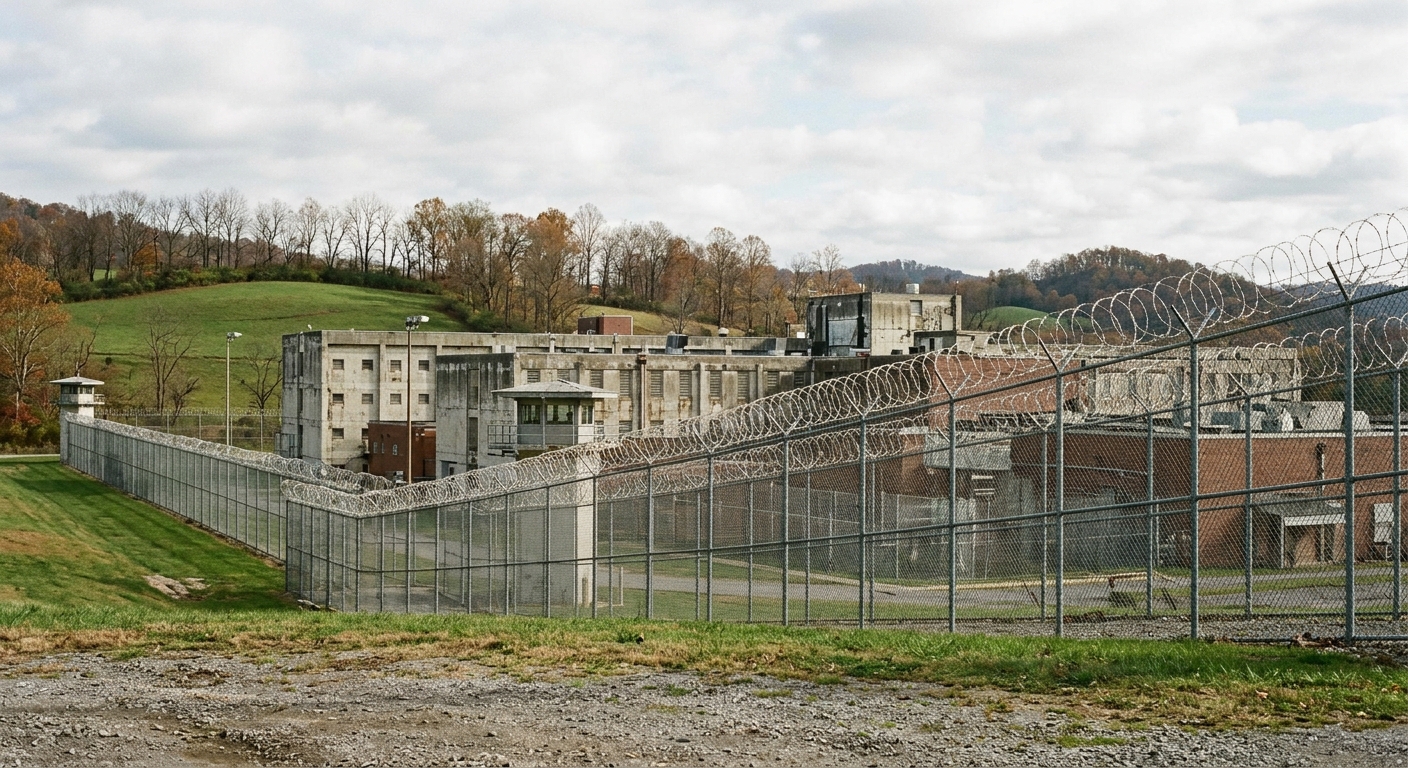
AI-generated illustration; not a photograph of the reported event.
- calendar_today October 10, 2026
Christa Pike Released from Hospital Following Failed Execution Attempt
More than a week after surviving a botched execution by lethal injection, Christa Pike has been released from a Nashville hospital and returned to prison. Pike was transferred back to the Debra K. Johnson Rehabilitation Center, according to her legal team, following her recovery from the failed attempt to carry out her death sentence.
Details of the Botched Execution
Pike was scheduled to die by lethal injection on Wednesday, September 30. However, after two doses of pentobarbital—the drug used in executions by the state—failed to end her life, she was rushed from Riverbend Maximum Security Prison to a nearby hospital. Her legal team described her survival and subsequent recovery as “medically unprecedented.”
Medical Recovery and Hospital Stay
According to her attorneys, Pike remained unconscious and on a ventilator for several days following the failed execution. On Monday, October 5, it was believed that Pike was braindead and arrangements were reportedly being made to take her off life support the following day. However, on Tuesday, October 6, she regained consciousness and began to speak, surprising those involved in her care. By Thursday, October 8, representatives for her legal team reported that Pike was able to take limited steps, marking a continued recovery from the ordeal.
Legal Response and Evidence Preservation
Pike's legal team responded by filing emergency motions requesting the preservation of all evidence related to the botched execution. Nashville Chancellor I’Ashea Myles granted the motion, ensuring that IV lines, syringes, tubing, photographs, handwritten notes, and waste associated with the failed execution would be preserved for further review and legal proceedings.
Reaction and Impact on Execution Protocols
Upon regaining consciousness, Pike reportedly asked, “Where am I, and who are you?” Attorneys described her as aware of the state's attempt to execute her, and as being angry and confused. This failed execution marks the second such incident in Tennessee in 2026. Earlier in the year, officials called off the scheduled execution of Tony Carruthers after failure to establish an IV for the lethal injection; he remains on death row with a one-year reprieve granted by Governor Bill Lee.
The incidents have resulted in state officials calling for a public hearing or a special session of the general assembly to address continuing problems with the state’s execution protocol. Governor Lee canceled the year’s remaining scheduled executions and called for an independent review of both Pike’s failed execution and Tennessee’s procedures surrounding the death penalty.
Background on Christa Pike and Related Cases
Christa Pike was convicted in 1995 for the murder of 19-year-old Colleen Slemmer in Knoxville, a crime she committed at age 18. Pike would have been the first woman executed in Tennessee in over 200 years. The failed attempt has brought renewed scrutiny to the state’s approach to capital punishment and the use of lethal injection as a method of execution.
The next person scheduled for execution was Gary Wayne Sutton, convicted for the 1992 murders of Connie Brannum and her brother Tommy Griffin. Sutton was convicted alongside his uncle, James Henderson Dellinger, who died on death row in 2023 while awaiting his own execution.
Continuing Coverage
The aftermath of Pike’s hospital recovery and the failed execution attempt continues to fuel discussion about Tennessee executions, lethal injection, and the future of the death penalty in the state. Legal experts and officials are conducting ongoing reviews to assess and potentially reform execution protocols in response to recent events.
Source: wkrn.com.