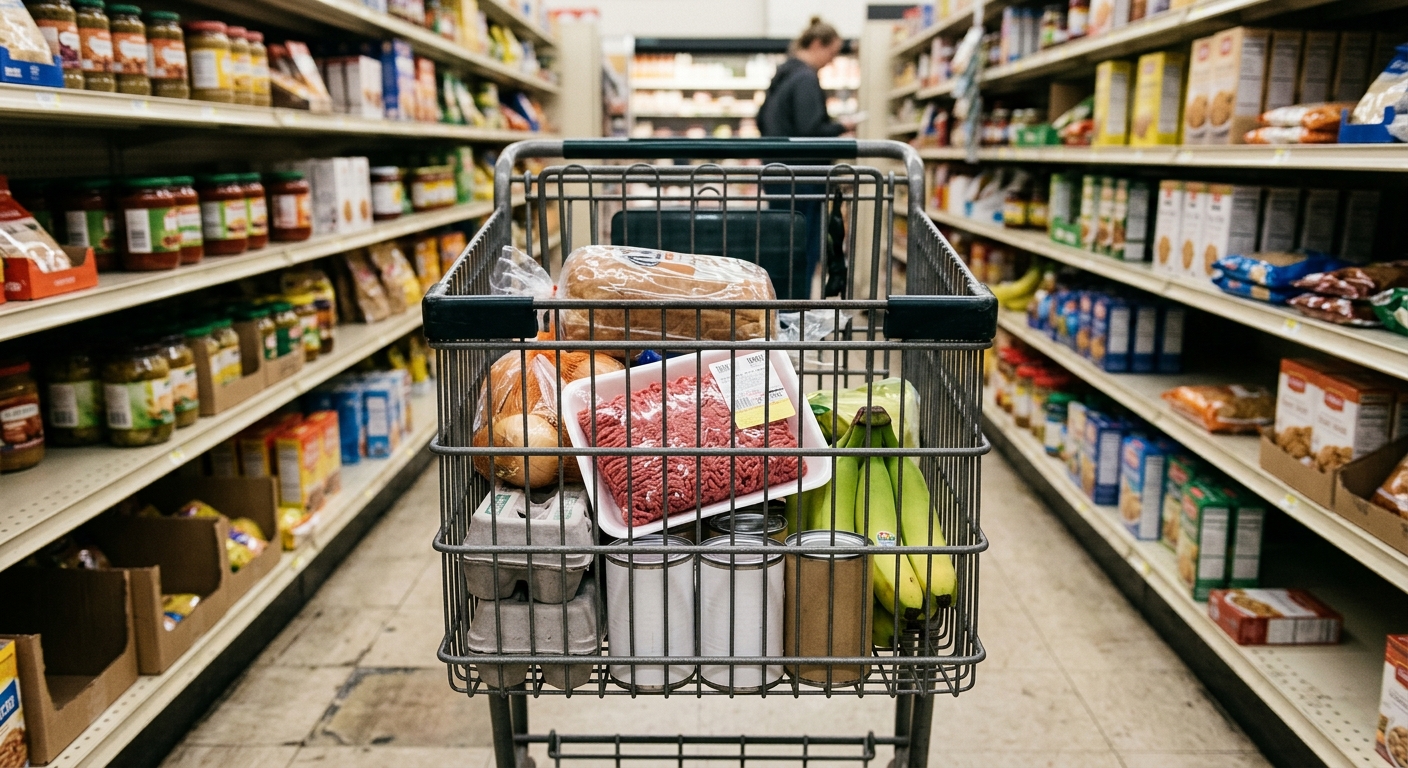
AI-generated illustration; not a photograph of the reported event.
- calendar_today October 10, 2026
Grocery Spending Remains High Despite Lower Inflation Rates
Although the inflation rate in the United States has eased from the double-digit highs experienced during the pandemic, grocery store prices have not followed suit. Many Americans are still grappling with elevated food costs, making the impact particularly acute in certain cities. A new study by WalletHub sheds light on where grocery spending eats up the largest share of household income.
WalletHub Study Highlights City-by-City Differences
The personal finance site WalletHub released a study ranking the 100 largest U.S. cities by the percentage of income their residents spend on groceries. The findings reveal substantial regional differences when it comes to grocery spending, painting a clearer picture of food affordability in various metropolitan areas.
According to the U.S. Department of Agriculture, Americans in 2024 spent an average of 12.9% of their pretax incomes on eating both at home and out. However, for the lowest-earning fifth of U.S. households, this share jumps significantly—to 33%, underscoring the outsized burden rising food prices have on those with lower household income.
Top 15 Cities Where Grocery Costs Weigh Most Heavily
Among the 100 largest U.S. cities, Detroit, Michigan ranks first for the highest proportion of income spent on groceries—4.03%. The study notes that despite having some of the nation’s lowest food prices for basics like beef and peaches, Detroit's median household income is also the lowest ($39,938), and nearly a third of its residents (32.7%) fall below the federal poverty level.
Cleveland, Ohio, follows closely in second place, with residents allocating 3.93% of their income toward groceries. Similar to Detroit, Cleveland features a relatively low median income ($40,801), according to government statistics.
The full list of the top 15 cities for grocery spending as a share of median household income includes:
- Detroit, MI – 4.03%
- Cleveland, OH – 3.93%
- Birmingham, AL – 3.45%
- Toledo, OH – 3.2%
- Newark, NJ – 3.15%
- Baton Rouge, LA – 3.11%
- Buffalo, NY – 3.1%
- Memphis, TN – 3.07%
- Cincinnati, OH – 3.05%
- Hialeah, FL – 2.99%
- Milwaukee, WI – 2.95%
- New Orleans, LA – 2.92%
- St. Louis, MO – 2.84%
- Winston-Salem, NC – 2.64%
- Miami, FL – 2.6%
Memphis, Tennessee, stands out as one of the cities where residents are particularly affected, with groceries consuming more than 3% of household income on average.
Regional Price Differences and Inflation Impact
Regional price differences persist. For example, the cost of food for home use rose by 2% over the previous year in St. Louis and by 6% in San Francisco, according to the Consumer Price Index. Such disparities can further strain food affordability in areas where incomes are not keeping pace with the cost of groceries.
Several factors have contributed to the sustained rise in grocery inflation: pandemic-related supply chain disruptions, increased labor and transportation costs, climate events, and global issues such as wars and tariffs. Some staples, like ground beef, have nearly doubled in cost over the past five years.
Changing Consumer Habits in Response to Higher Costs
The continuing increase in grocery costs has prompted many consumers to adapt their shopping habits. Discount retailers including Costco, Walmart, and Aldi are gaining market share, as shoppers seek ways to stretch their budgets. Store-brand or private-label products are also becoming more popular, hitting a record $282.8 billion in sales last year, based on data from the Private Label Manufacturers Association.
To combat rising prices, experts recommend a range of budgeting tips: take advantage of sales and coupons, buy generic products, purchase in bulk, and use rewards-earning credit cards—while ensuring balances are paid off monthly.
Looking Ahead: Food Affordability Remains a Challenge
With events such as international conflicts contributing to fluctuations in food prices, food affordability is likely to remain a concern for many American households. While overall inflation may be stabilizing, experts warn that unless there is actual deflation, consumers should not expect grocery prices to decrease in the near future.
"I think the public is coming to grips with, 'Well, I’m hearing inflation has slowed, but things aren’t getting any cheaper,'" said Matt Hamory, a consultant at AlixPartners. "It has to be deflation for prices to go down, and that’s very rare."
Source: wkrn.com.